
If you have ever sat down to meditate, and within three seconds have a to-do list, a deeply embarrassing memory from the year 2012, and an itch on your nose the size of an apple, you are not failing. You just have a typical brain. The biggest myth of meditation is that you need to completely clear your mind. You need to empty your head of all thoughts. Meditation is not the suppression of thought; it’s about changing your relationship to it. It does not require that you spend years in an ashram, that you wear only beautiful linen robes, and that you be able to remain in Lotus until your toes go totally numb.
Incorporate NSDR if Needed

If sitting still initially is too frustrating for you, in place of sitting meditation, try NSDR or basic Yoga Nidra. These guided techniques involve lying completely flat while training your brain how to slip into a state of deeply conscious relaxation. This is a training wheel for learning to downregulate the nervous system.
Count your Breath to keep the Mind Bounded

If the sensation of the breath feels a little abstract for you, give the logical side of your brain something small to do. When you inhale, count “one” mentally. When you exhale, count “two.” Continue counting up to 10, then start over with 1. If you fall off the count, don’t beat yourself up; just drop whatever count you were on and restart from 1.
Try the Touch and Go Labeling Technique.
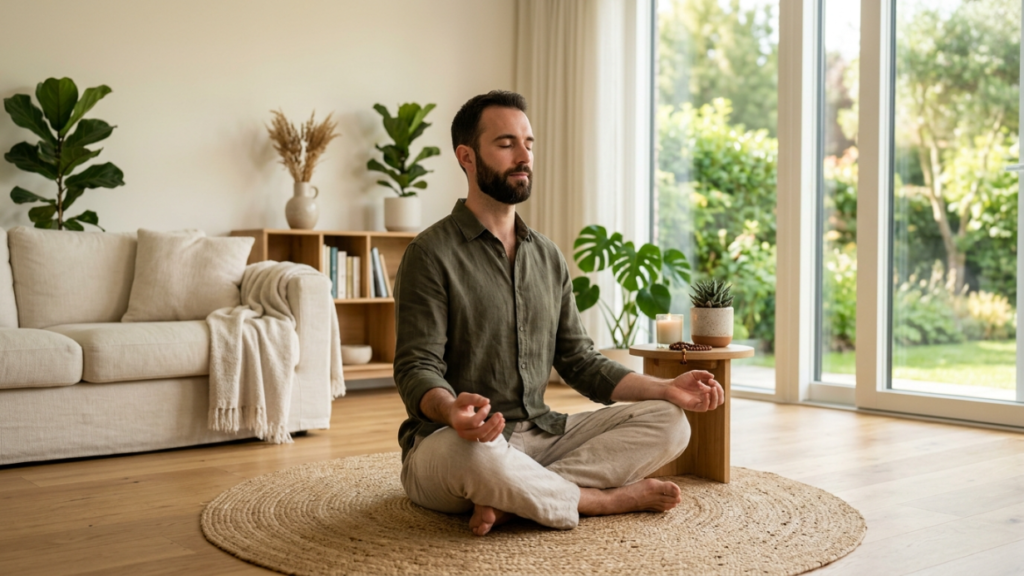
When sensations or emotions arise, don’t engage with them. Just try out the labeling technique. If you get a worrying thought about tomorrow, mentally whisper “thinking” or “planning” in your mind and let it go. When you hear a honking horn out the window, whisper “hearing.” The label takes the steam out of the thought/sensation and lets it pass more easily.
Try a Guided Audio App
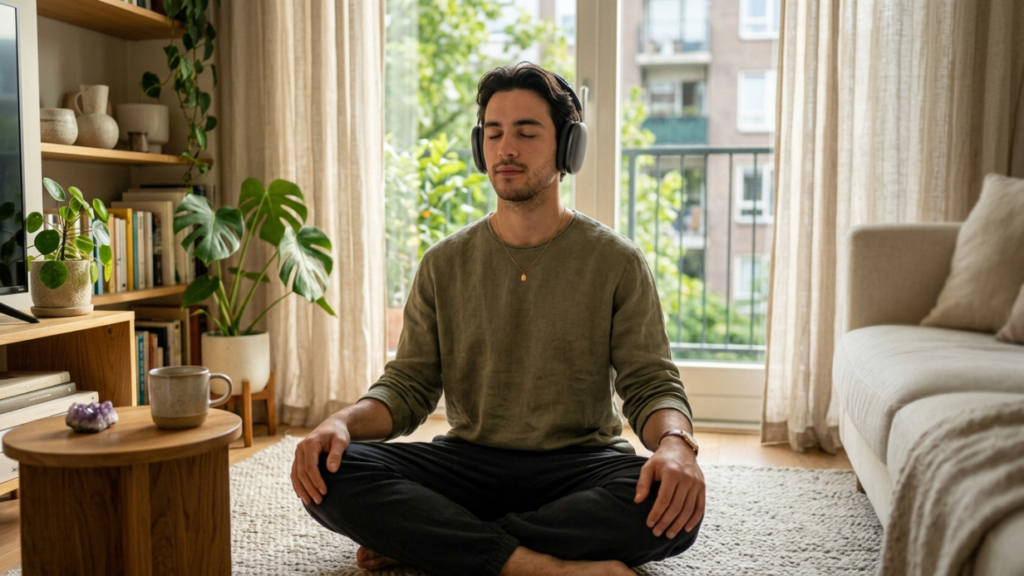
There’s no gold star in meditation for enduring an unguided experience. Use technology. This gives you a stable voice that will take your mind on a gentle walk and bring you back when it is apt to drift. Start with short, non-religious tracks that will walk you through a simple body scan or simple meditation.
Shift into a Box Breathing Reset

If you are too wired to quietly be with yourself, take the reins with an active breathing sequence. Box Breathing: inhaled for 4 seconds, held for 4 seconds, exhaled for 4 seconds, held for 4 seconds. This physically regulating pattern immediately recalibrates the nervous system and forces your mind to focus on the rhythm.
Practice Open Awareness via a Body Scan
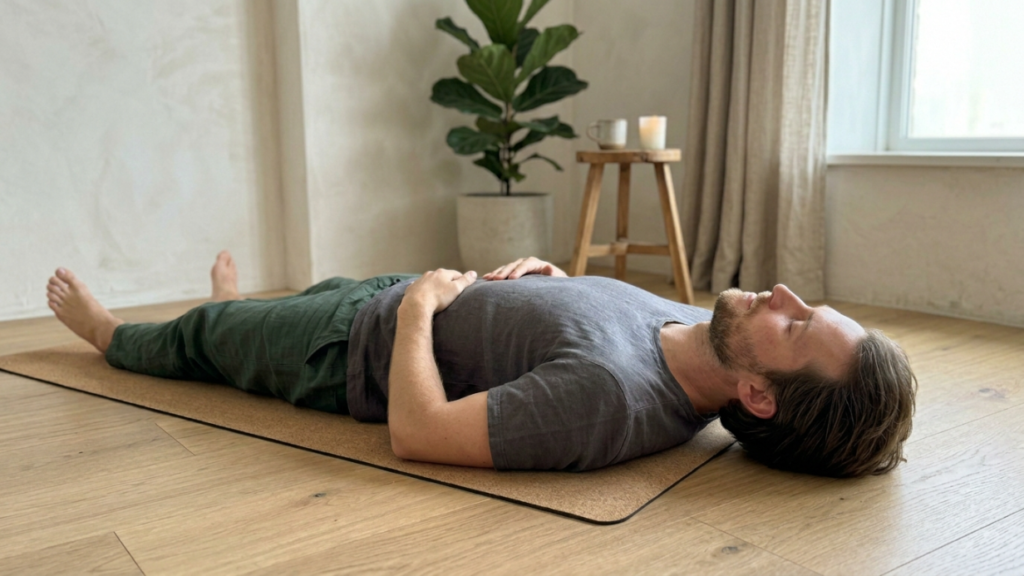
If focusing on the breath feels too restrictive for you, simply redirect the focus of your awareness onto your physical body. Starting at the top of your head and scanning downward, observe the weight of your scalp on your head, the clench of your jaw, the way your shoulders naturally sag, the feel of your clothes on your skin, and so forth, all the way to your toes.
Forgive the Bad Sessions

Some days your mind will feel completely calm. Other days, you will feel like your mind is a cage of caffeinated monkeys! Either session is equally beneficial. A chaotic meditation where you constantly need to bring your mind back is actually superior for strengthening the focus muscles of your brain than a naturally quiet session.
Drop all Expectations of Immediate Enlightenment

Meditation is a cumulative practice, not an instant pill! Don’t finish a three-minute session with expectations of immediate divine bliss. Meditation rarely benefits you during the session, but rather later when you handle stress a little more gracefully.
