
Caffeine may be able to trick your brain into suppressing feelings of fatigue by interrupting your body’s ability to communicate the messages that tell you to take a nap; it also elevates stress hormones and gets your heart racing. What does lower stress mean? Not caffeine, but something far more powerful- a transformation in the way your body responds. The Vagus Reset is an intensive routine that takes just ten minutes to help your nervous system transition from being stressed out and in “fight or flight” mode to a relaxed state of “rest and digest.”
Physiological Sigh (60 Seconds)

Inhale deeply through your nose, filling your lungs. After that, inhale a bit more in order to add some additional air into your lungs. Breathe out through your mouth, spending two times longer doing that as while breathing in. Do the exercise five times in total for quick CO2 elimination from your blood and inform the brain to slow down your heart rate.
Basic Exercise (Ocular Shift) (60 Seconds)

Either lie back or sit down, interlock your fingers behind your head without moving your head itself, but look at something as far to the right as possible without moving your head, and hold this gaze until you experience natural sighing, yawning, or swallowing. That shows that the autonomic nervous system switched states to calm mode. Repeat on the other side.
Tragus Massage (45 Seconds)

Vagus nerves pass through our ears. It will be helpful to gently rub the tragus, a piece of cartilage located in front of the ear canal, using your fingers. It will contribute to decreasing tension in your body.
Humming and Chanting (60 Seconds)

As the vagus nerves pass through the vocal cords, hum a low note such as “Om” or “mmm”. The best effect is when feeling the vibrations around your chest and throat.
Wider Vision (30 Seconds)

Rather than looking at one specific point, focus on your wider vision of seeing all the surroundings around you. Widening your vision makes your brain believe that you are not under any threats and helps your brain relax.
Throat Gargling (30 Seconds)
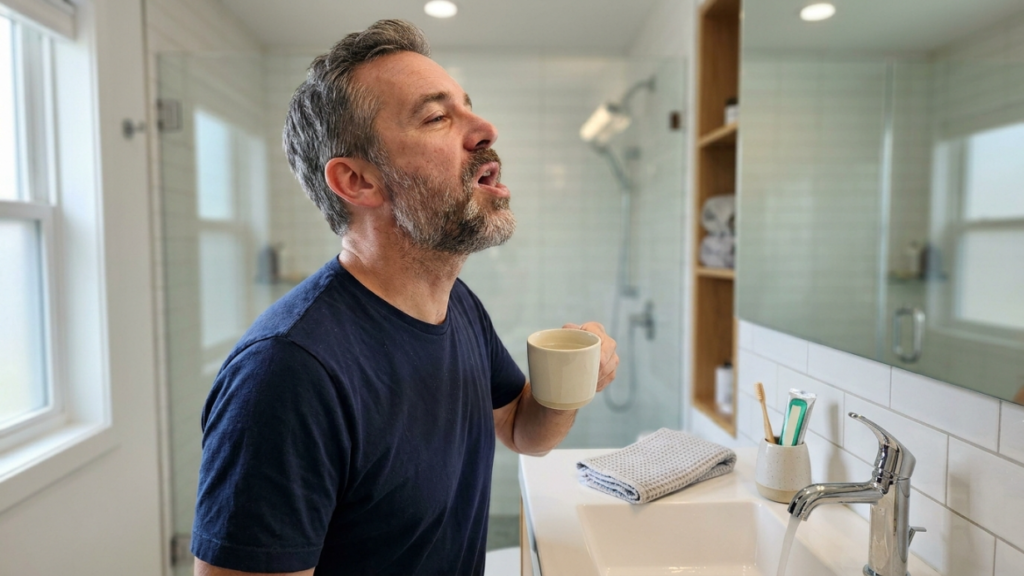
Fill your mouth with some water and start gargling strongly and forcefully with your mouth wide open. Muscle activities that occur while gargling cause vagus activation in your throat, especially when you perform the activity more intensely.
Suboccipital Release (45 Seconds)

Use your fingers to place pressure on the two depressions on the back of your head where it attaches to your neck. Tuck your chin slightly while holding pressure to stretch the muscles of your upper neck area.
Lateral Neck Release (30 Seconds)

Place one hand against the side of your head and lean gently to feel a stretch. Breathe into the side of your neck where the carotid sinus- the area responsible for regulating blood pressure- is located.
