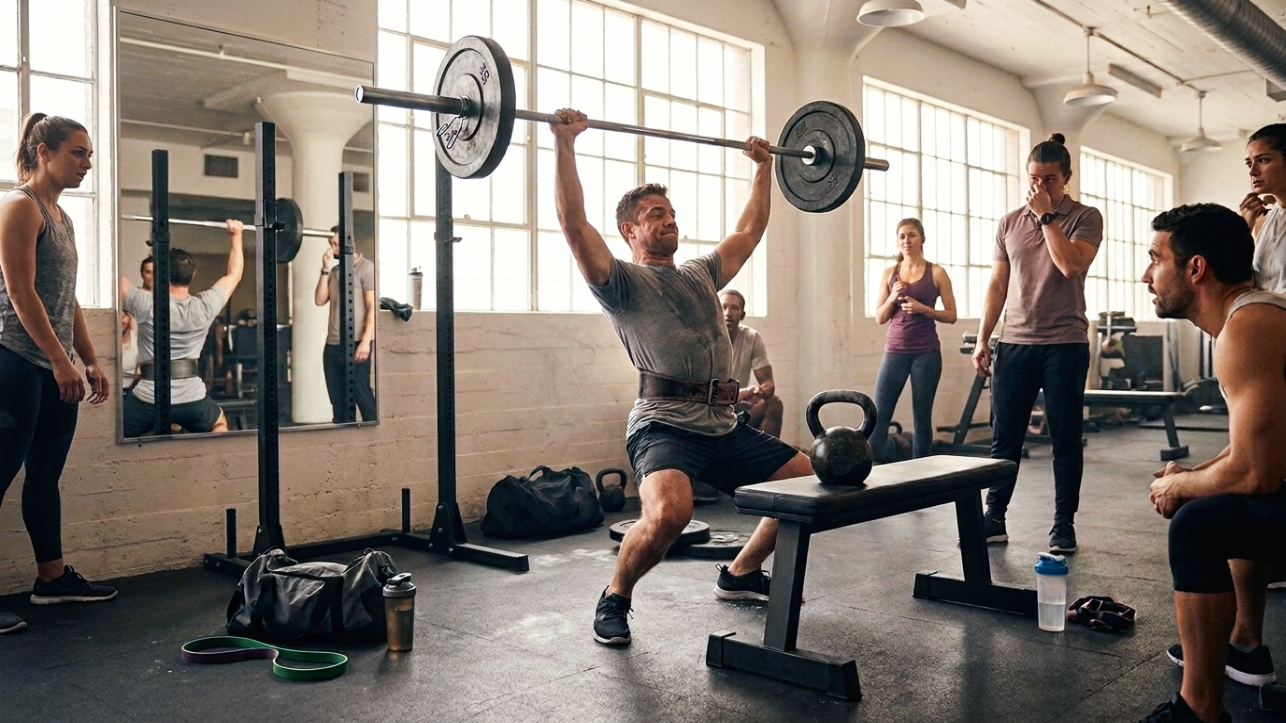
During a workout, when an individual engages in an exercise in the wrong way, the mechanical stress on the muscles will be lower while the weight of the body will rest on the ligaments, tendons, and joints, thus bringing about cessation of muscle enlargement as well as making the body vulnerable to acute and overuse injuries. It is therefore imperative that form be corrected so as to facilitate joint angles and muscle activation.
Barbell Squat
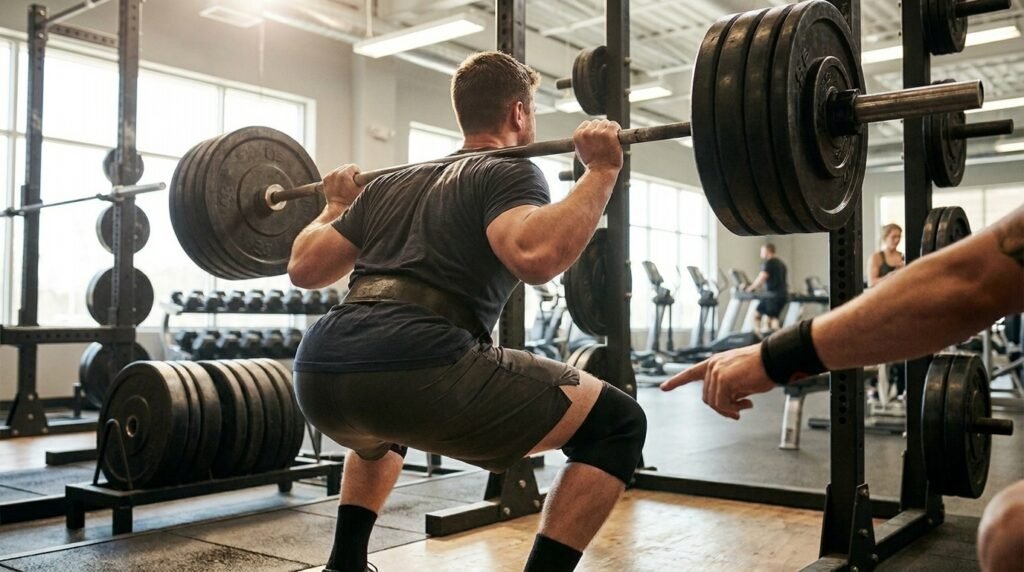
Error: Inward collapsing of the knees puts the ACL under stress. Lower back rounding while carrying any weight induces shearing forces in the lumbar discs.
Correction: Spread the knees as wide as possible, ensuring that they move above your toes. Engage your core muscles like you are expecting a powerful punch to stabilize your spine. Do not get too low during the movement if your pelvis is sagging (butt wink).
Push-Up
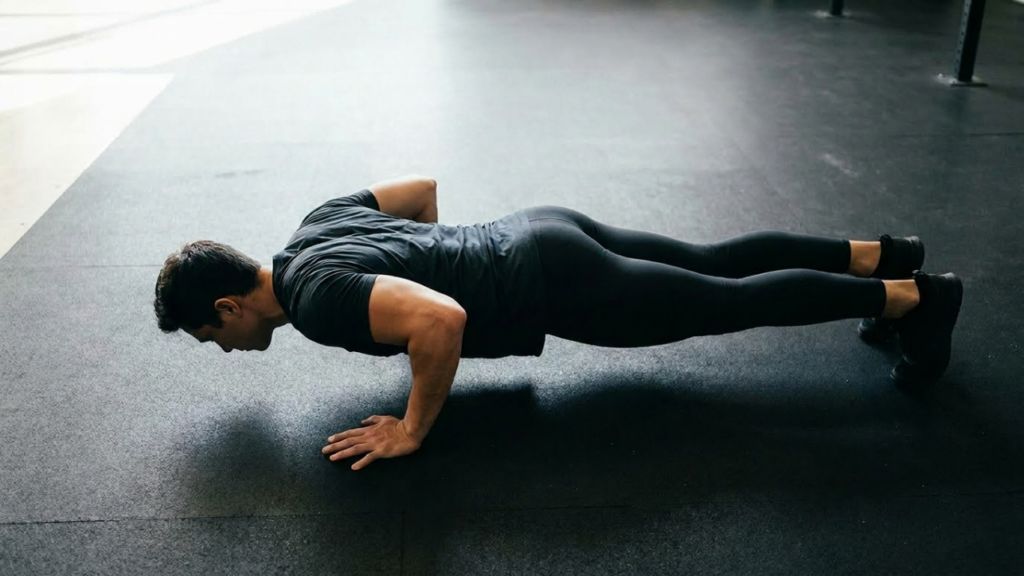
Error: Extending the elbows beyond 90° to form a T-silhouette puts undue pressure on the rotator cuff tendons. Hip drop means that the entire core is switched off.
Correction: The elbows should be kept at 45° to create an arrow silhouette. The hands must be directly below the shoulders while contracting the buttocks and abdominal muscles to maintain proper alignment.
Lat Pulldown
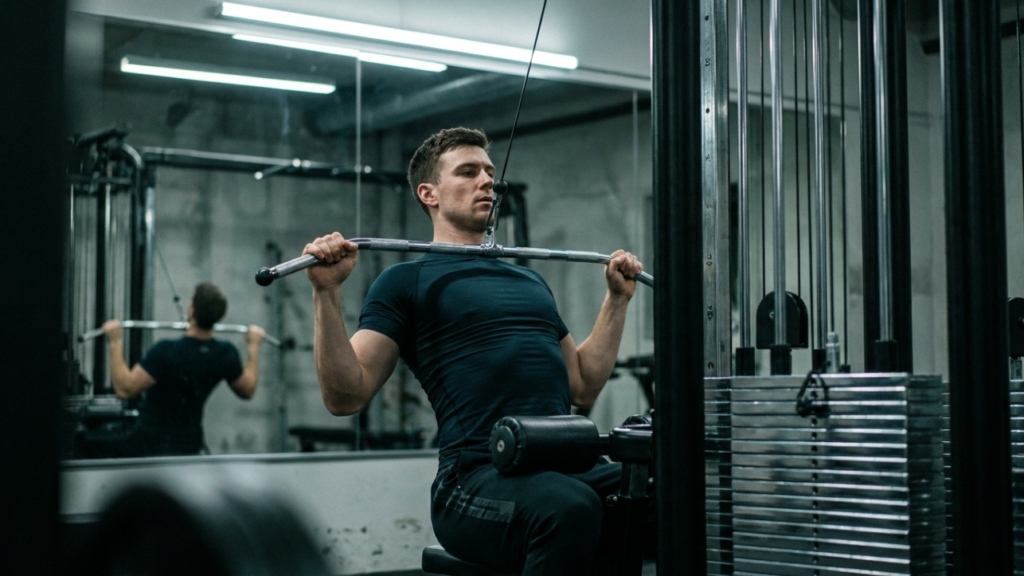
Error: Overaggressive back arch makes the lat pulldown more of a rear deltoid and bicep isolation exercise. Dragging the bar towards the stomach places excessive internal rotation tension on the shoulder joint.
Correction: Stick to a slight lean (10-15°). Initiate the exercise by pulling the elbows down towards the hip socket. Stop the bar at the collarbone level with the shoulders locked in place.
Overhead Barbell Press
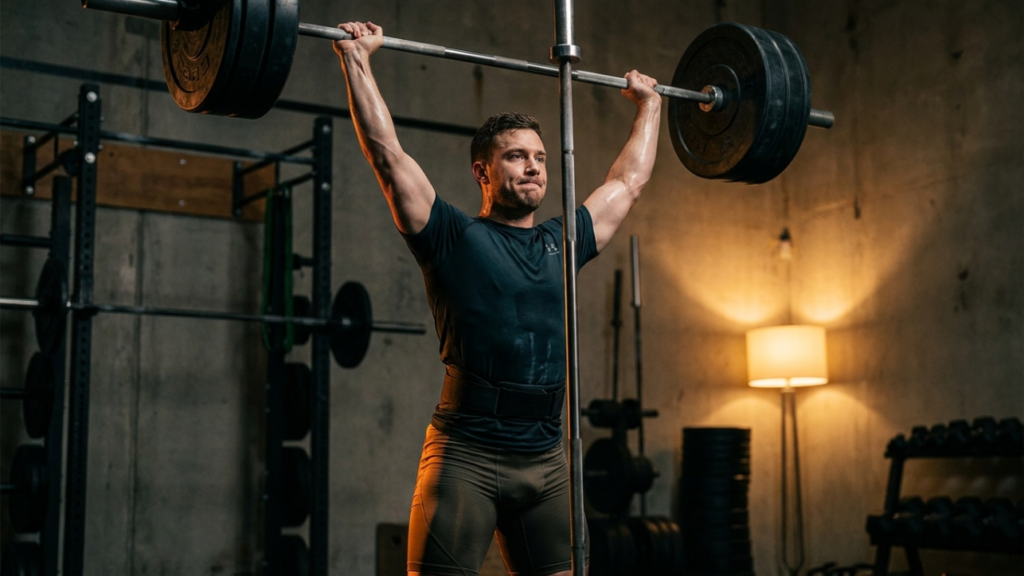
Error: Excessively arching the lower back to make it more like an inclined bench press, thereby putting enormous pressure on the lower spine.
Correction: Contract the glutes and quadriceps muscles to make a stable base for yourself. Press the weight overhead vertically and retract the head just enough to allow the barbell through before pressing forward through the window created by the arms.
Bench Press
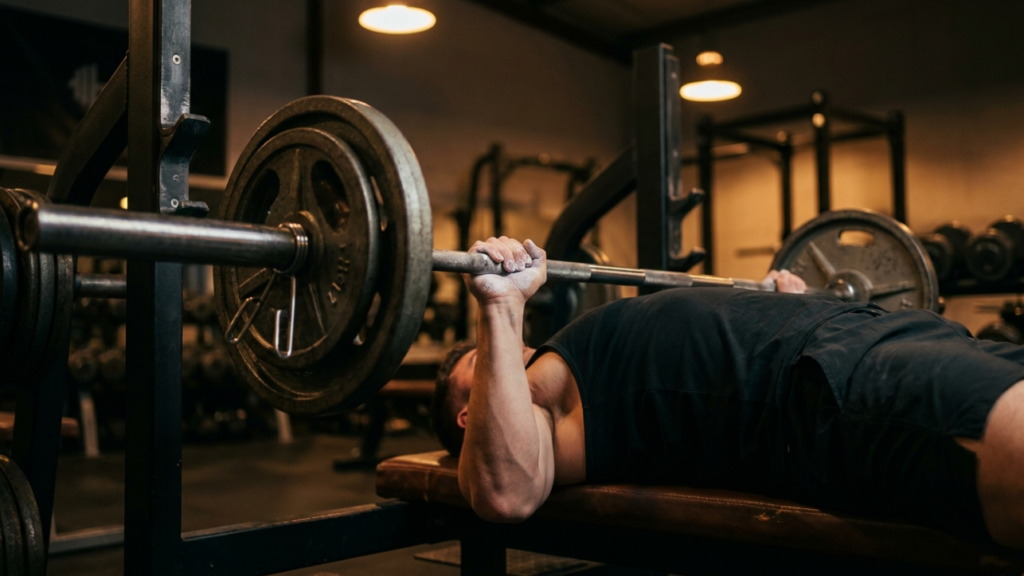
Error: Elbow flaring at 90° places excessive stress on the anterior delts and shoulders. Using the bounce method loads up the momentum rather than muscle fiber recruitment.
Correction: Pull the shoulder blades into the bench. Maintain the elbows tucked at 45- 60° angles. Lower the bar to the lower sternum, pause slightly, then press upward and back.
Tricep Rope Cable Pushdown
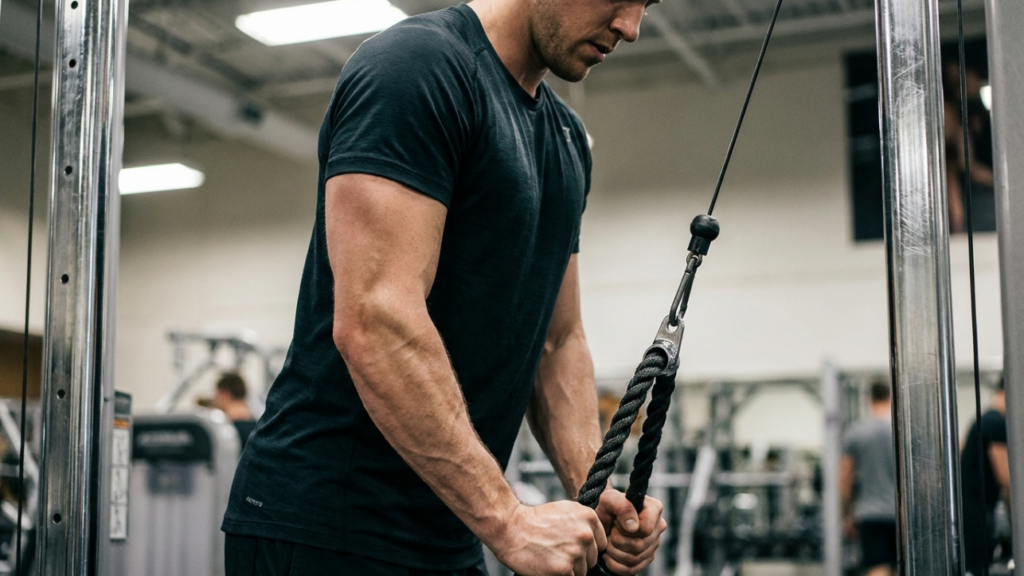
Error: Shoulder protraction and use of momentum via the chest and front deltoid to push the bar down.
Correction: Bring your shoulder blades together and squeeze your body straight, with your elbows tucked into your ribcage. Isolate your triceps, using only arm movement at the elbow joint prior to opening up the rope.
Hanging Leg Raise
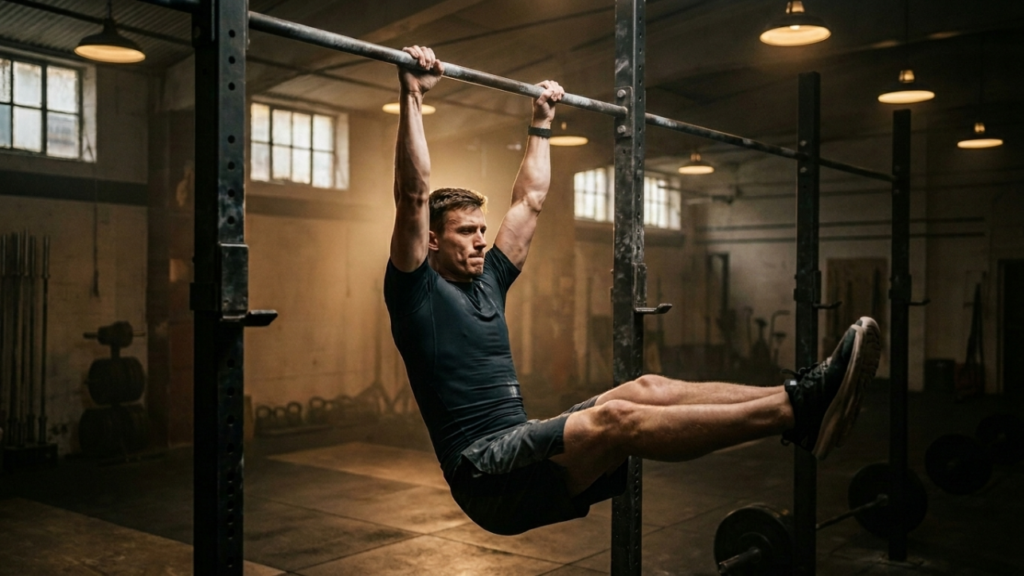
Error: Using momentum generated by leg swings to make the movement easier overworks the hip flexors (psoas), and the abdominal muscles are totally disconnected during the lift.
Correction: Hold the bar and draw it down using your lat muscles to keep the trunk stable. Elevate your legs steadily as you lift your hips towards the ribcage.
Russian Twist

Error: Round your lower back and twist rapidly from side to side using fast-moving hands, creating a serious spinal injury risk due to rotation.
Correction: Maintain spinal alignment with a slight forward lean of the torso. Stabilize your hip area and rotate your rib cage side to side.
