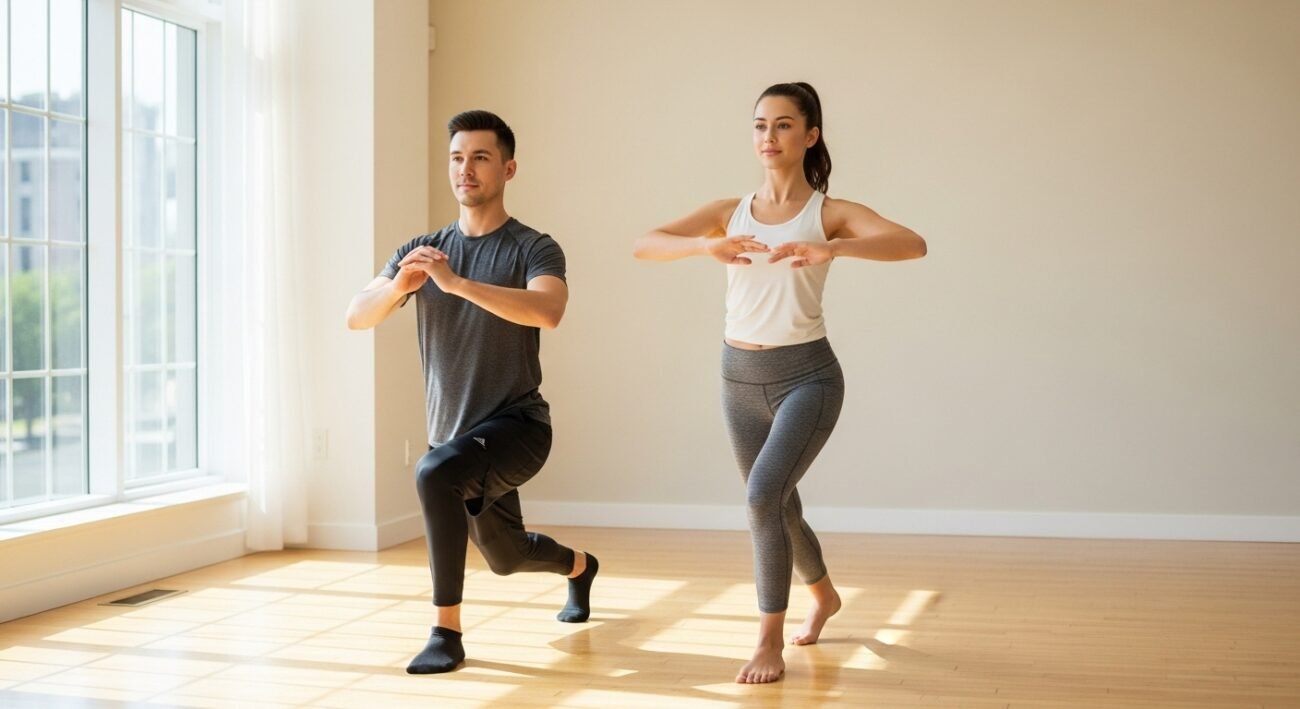
Joint health maintenance stands as a vital element for sustaining physical mobility throughout life especially during aging and post-injury recovery. High-impact activities such as running and jumping deliver cardiovascular advantages but they impose heavy forces on the body’s musculoskeletal system through their repetitive movements. Low-impact workouts present a method that enables people to enhance their cardiovascular endurance and muscular strength and flexibility while they reduce the hip and knee and ankle joint vertical forces. The exercises create a safe space which enables cartilage and connective tissues to develop through their employment of fluid movements and buoyancy and external resistance. A low-impact routine requires physical effort at its highest level yet it uses biomechanical efficiency and joint preservation as its primary operational methods.
The Buoyancy of Swimming
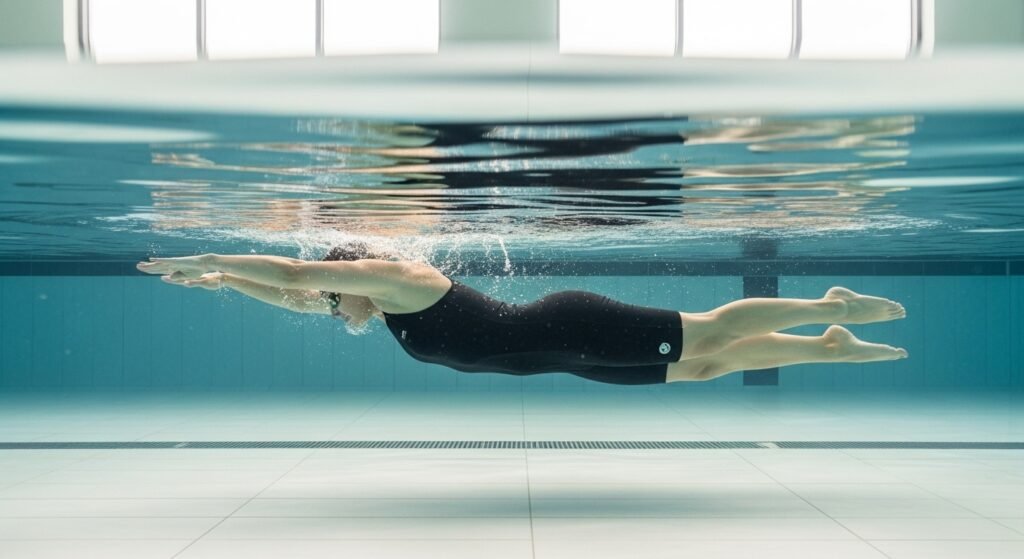
Aquatic exercise is often regarded as the optimal method to maintain healthy joints. The water’s buoyancy enables people to move their body weight with almost no impact while they work their muscles through natural resistance which also boosts their cardiovascular fitness level.
Stationary or Outdoor Cycling
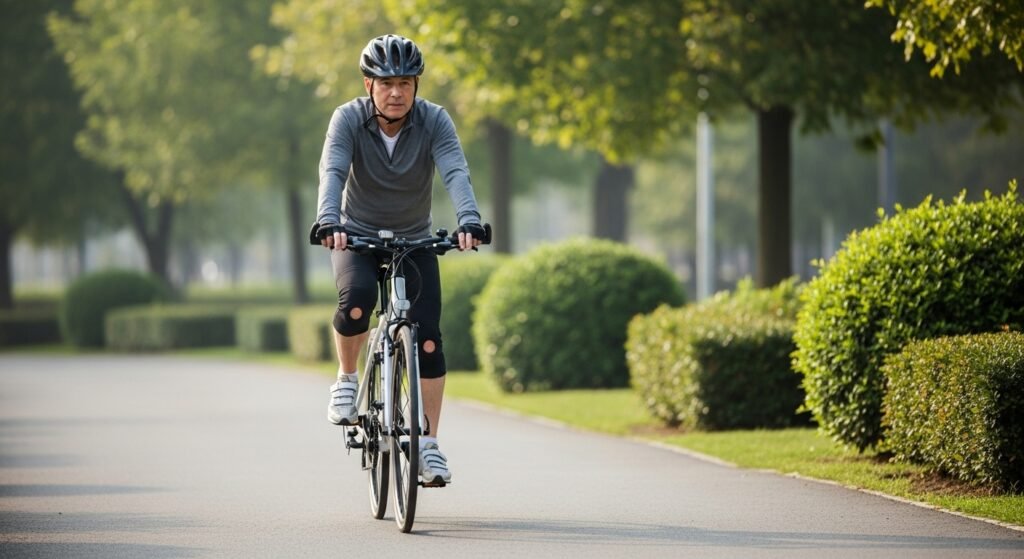
Cycling provides a confined circular movement pattern that enables continuous knee and hip joint motion without causing the knee joint impact damage which occurs during outdoor running. The method proves highly effective for developing quadricep and hamstring power which subsequently strengthens the knee joint.
The Fluidity of Tai Chi
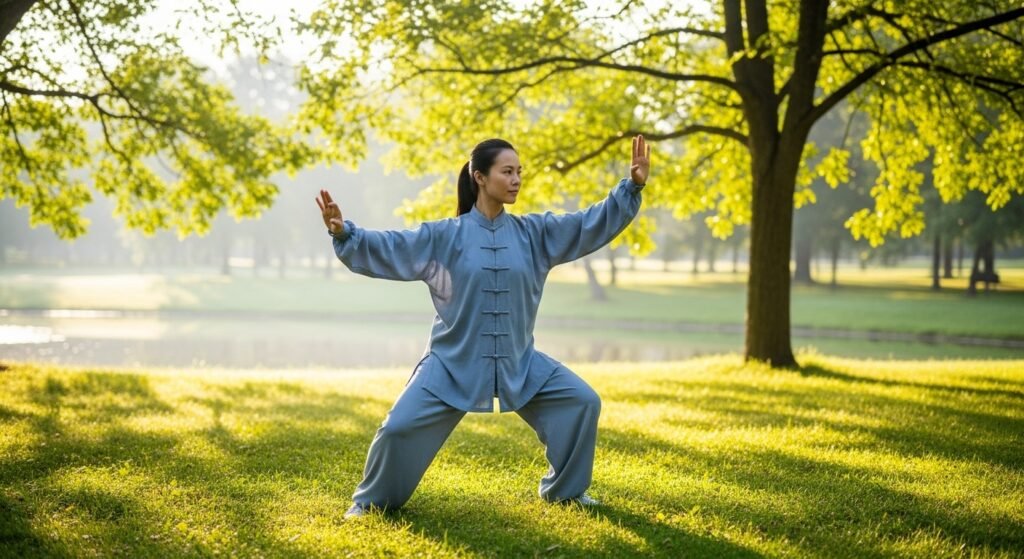
Tai Chi operates through its gradual and methodical movements which people combine with intense breath control. The practice develops body awareness together with balance skills which help people avoid falls while reducing their connective tissue tightness.
Stability and Core Strength in Pilates
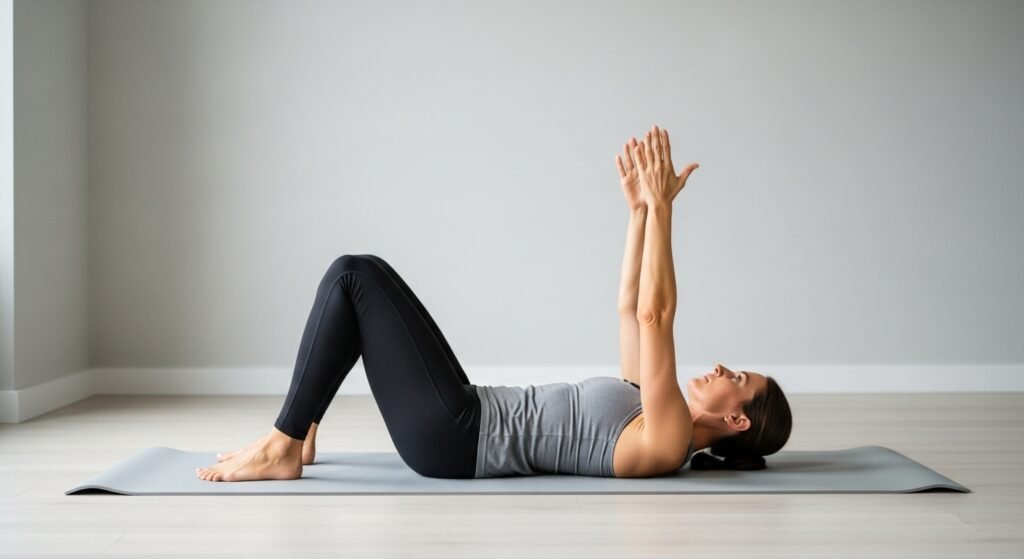
Pilates teaches core strength through controlled exercise patterns. Pilates creates strong abdominal and back muscles through its exercise program which helps correct spinal alignment while minimizing joint stress on the body.
Yoga for Flexibility and Joint Lubrication
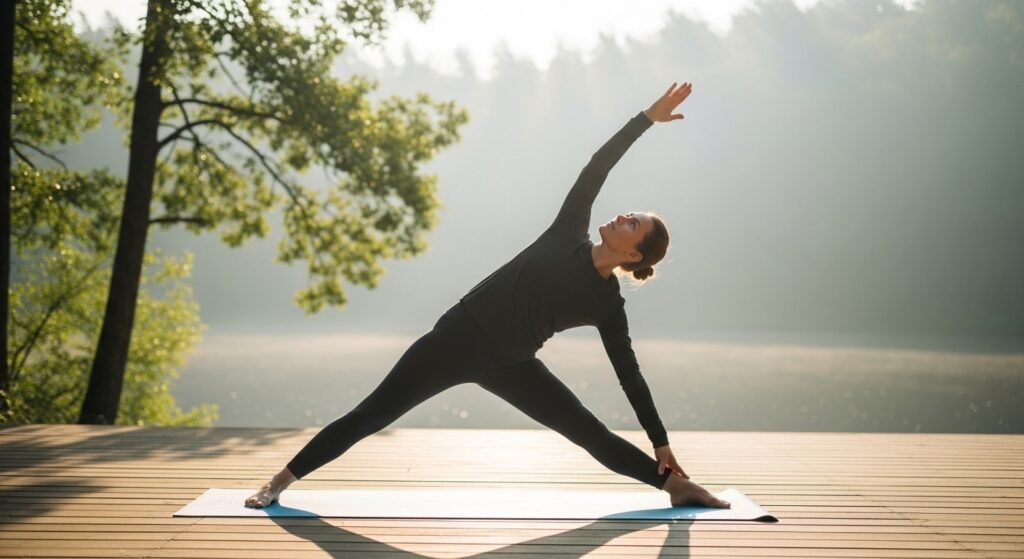
Yoga uses stretching and isometric exercises which result in increased synovial fluid production. Synovial fluid acts as a natural joint lubricant which enhances joint movement capacity while decreasing stiffness that typically comes from prolonged sitting.
The Accessibility of Brisk Walking
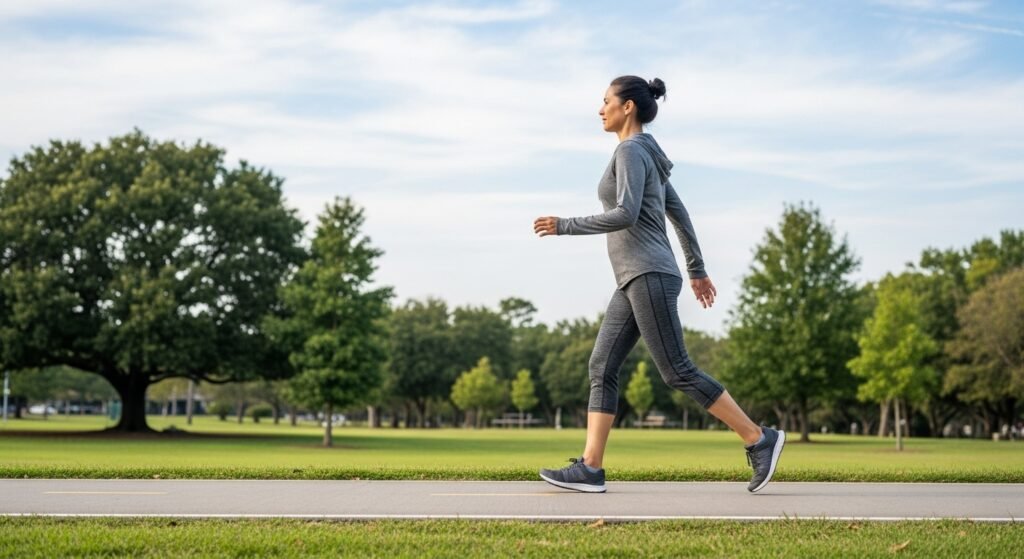
Walking maintains one foot on the ground which leads to lower impact force compared to running. The exercise method remains accessible because it requires no special equipment yet it supports bone health and joint health preservation.
Elliptical Training for Continuous Motion
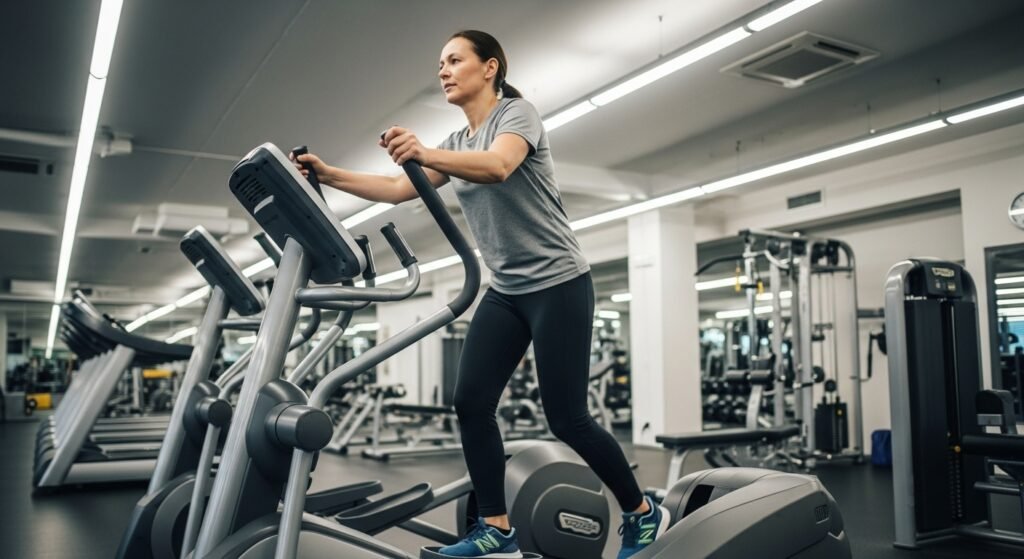
The elliptical machine replicates running motion through its suspended pedal system which creates a running-like experience. The design enables users to engage in high-intensity cardiovascular training through its continuous pathway which prevents any lower body shock effects.
Resistance Band Training for Controlled Tension
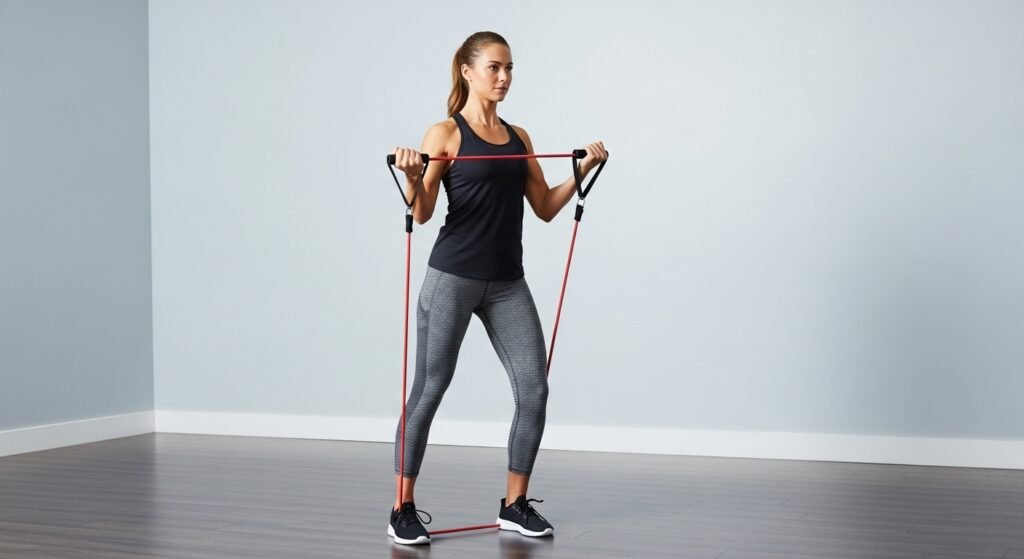
Resistance bands enable users to create tension through their linear variable tension mechanism which differs from heavy weights. The technique enables users to strengthen their surrounding muscles through controlled resistance that maintains a smooth flow without causing tendon or ligament damage.
Full-Body Engagement through Rowing
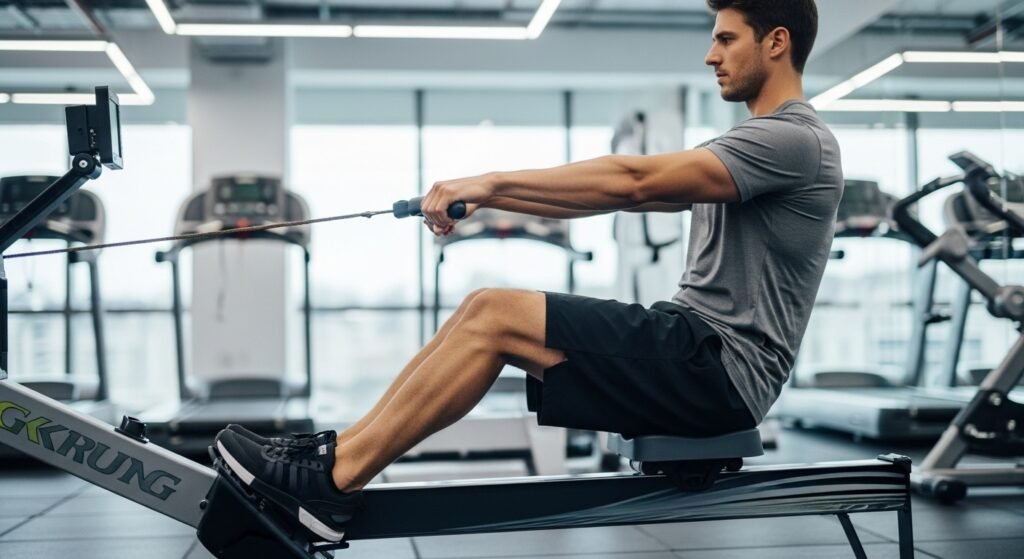
Rowing functions as a highly effective low-impact exercise which engages all three major body areas simultaneously. The seated design of the equipment enables users to shift weight away from their knees which makes it suitable for individuals who have knee sensitivity issues.
Water Aerobics for Resistance Training
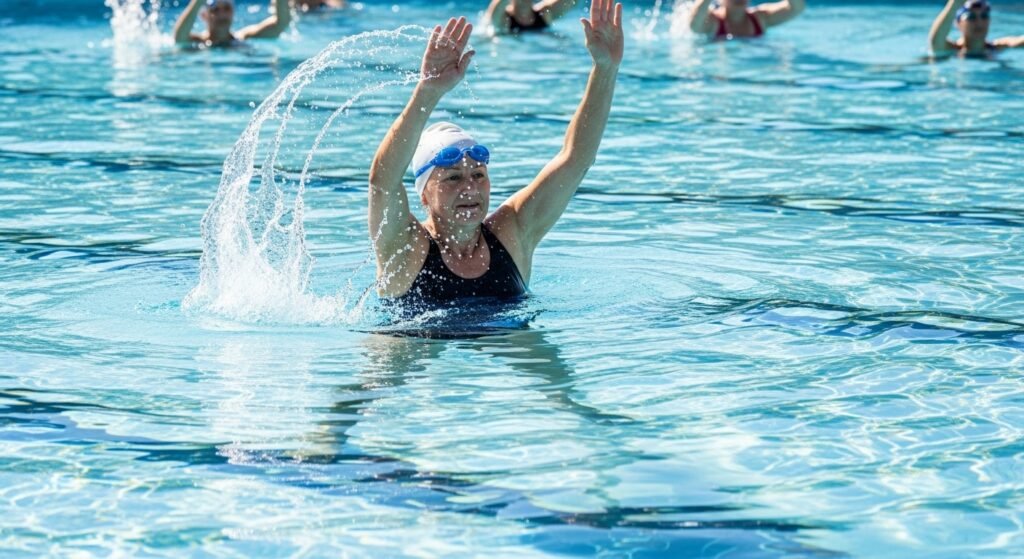
Water aerobics shares the same resistance characteristics as swimming because it uses the natural water density to create resistance against all types of body movement. The exercise method enables people to perform vertical actions and light jumping which would damage their bodies if they attempted it on solid ground.
Isometric Exercises for Static Strength
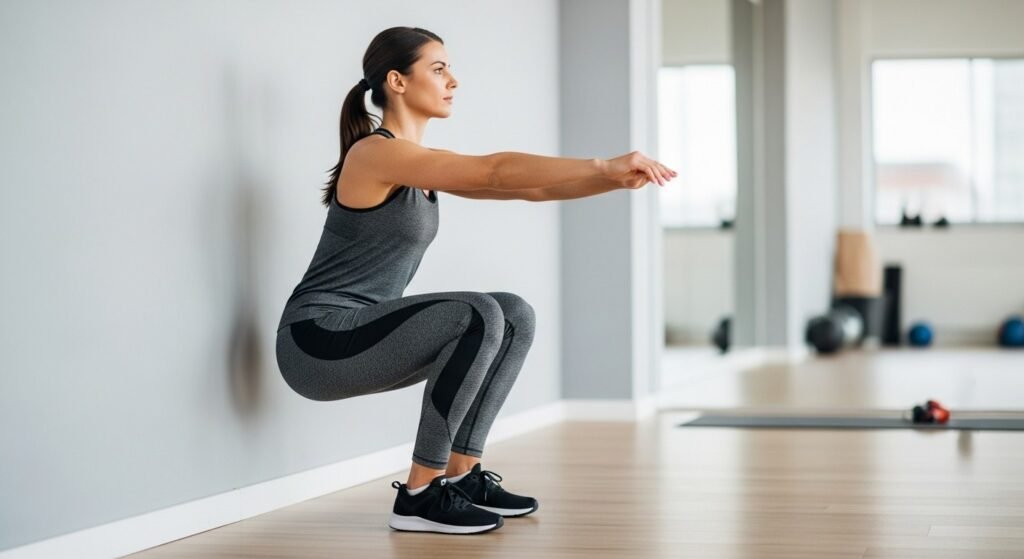
Isometric exercises require users to maintain muscle contraction without lengthening their muscles through movements such as wall sits and planks. The method builds stabilizing muscle strength around a joint without needing active joint movement through its entire range of motion.
The Gliding Motion of Cross-Country Skiing
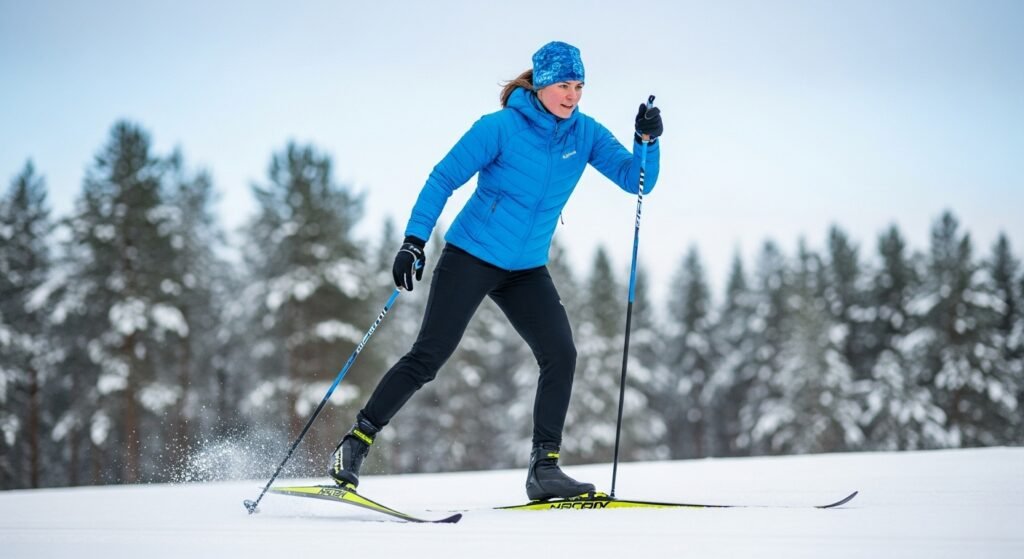
Skiing allows users to experience full-body exercise through its snow-based and indoor machine-based gliding motion. The method protects the body because it avoids sudden body changes which would lead to hip and lower back injuries.
Strategic Mobility and Stretching Protocols
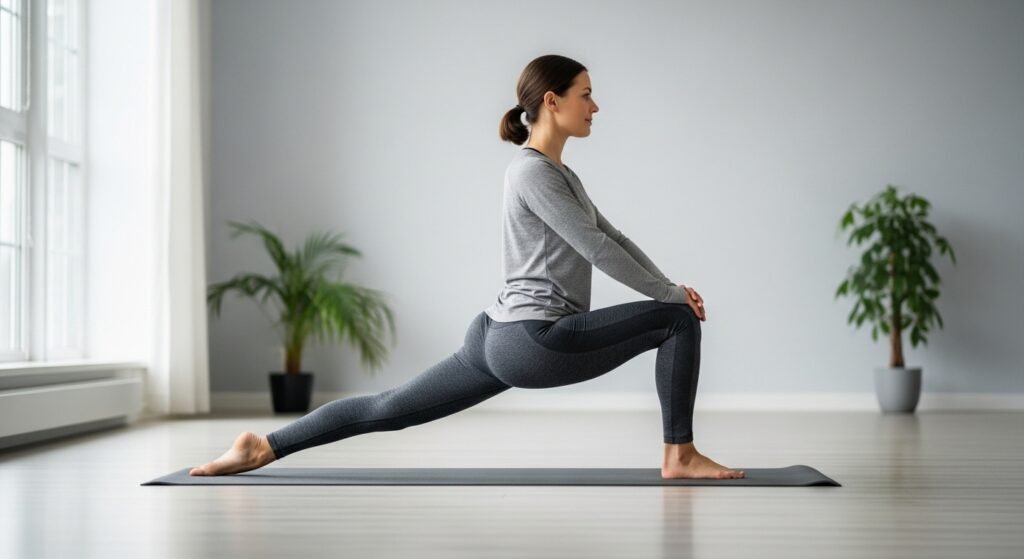
The dedicated cool-down period which includes static stretches helps muscles retain their flexible properties. Muscle flexibility prevents joints from experiencing excess tension which leads to chronic discomfort while enabling people to move freely for extended periods.
