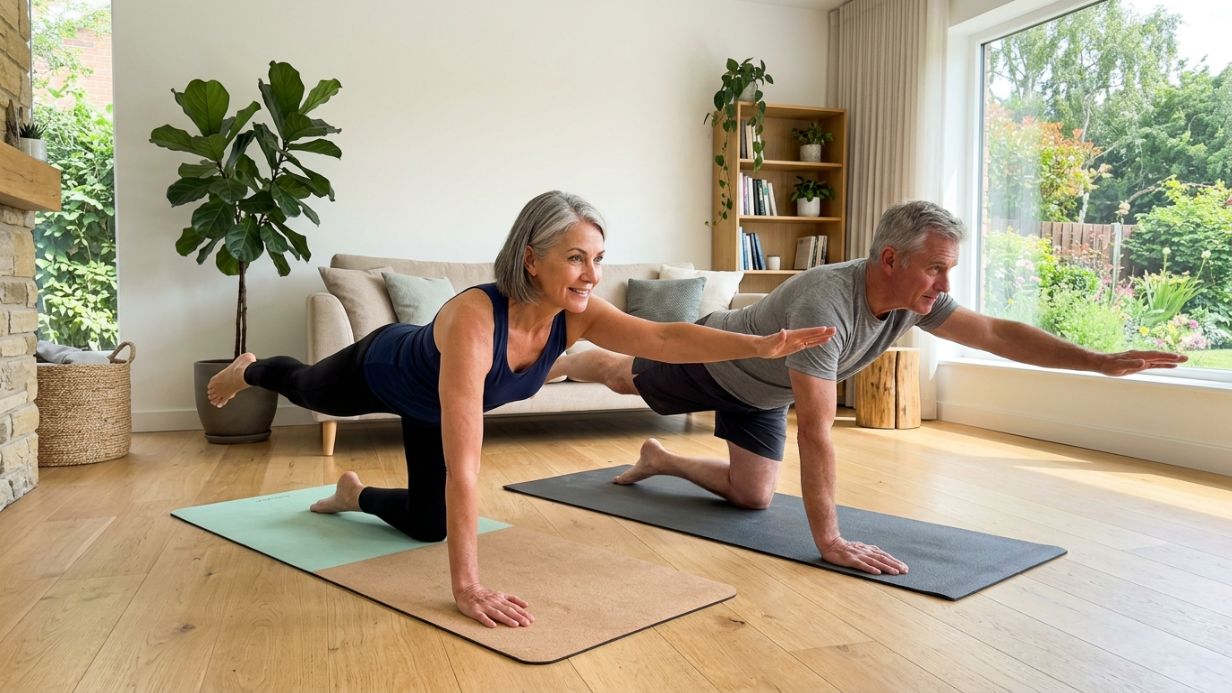
While the idea of a six-pack may be attractive for those 50 years old and above, this is definitely not what the core workout should be focusing on. It’s more about having a tough spine, improving your balance, and doing daily activities much more easily. Crunches may not always be safe for older neck and lower back. In this highly efficient 3-minute routine, you will do high-yield yet low-impact exercises that keep your joints safe while activating your deep core muscles, such as the transverse abdominis (corset muscle) and obliques.
The Warm-up: Dynamic Pelvic Tilts
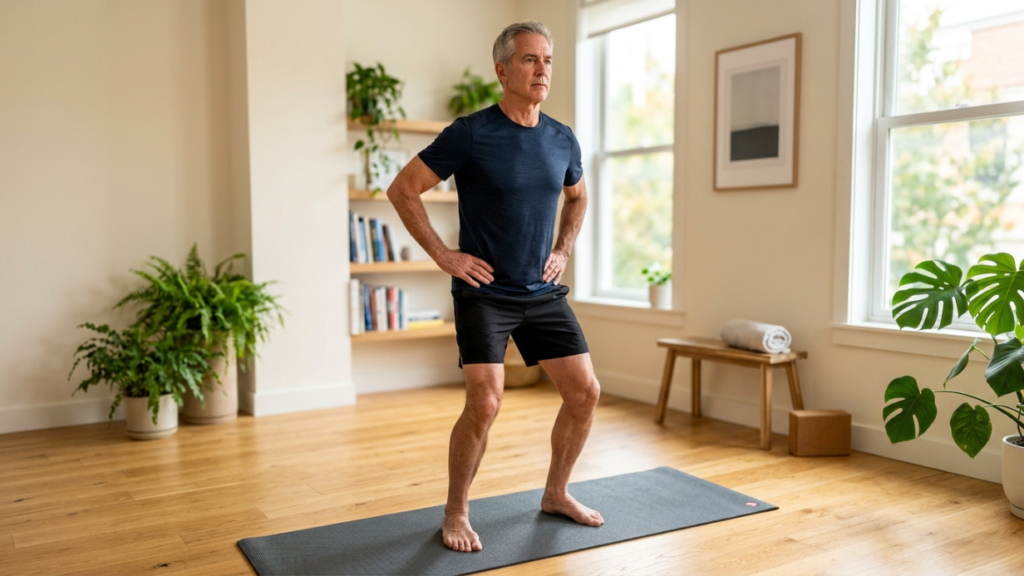
Start with 20 seconds of standing in front of your workout mat with knees slightly bent. Draw your tailbone underneath yourself, engage your glutes, then release into the arch position and engage the muscles responsible for stabilizing your lower back.
The Glute Bridge Spine Extender
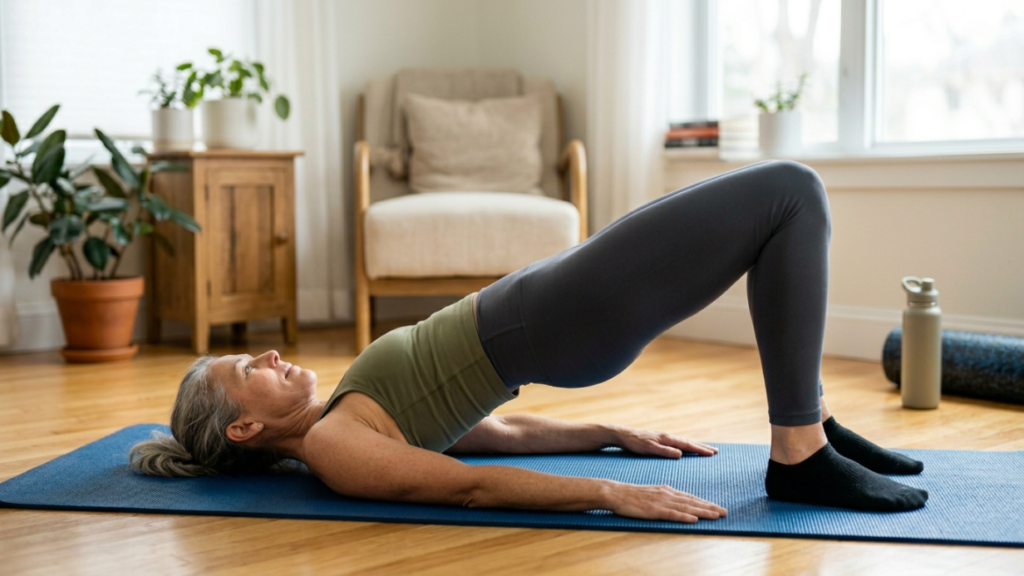
Push through the heels to elevate the hips until your body makes a straight line between your shoulders and knees. It’s not necessary to hold this position for 3 minutes-instead, try to pulse in this position for 20 seconds to engage the posterior chain that is responsible for supporting the lower back.
Balanced Bird-Dog
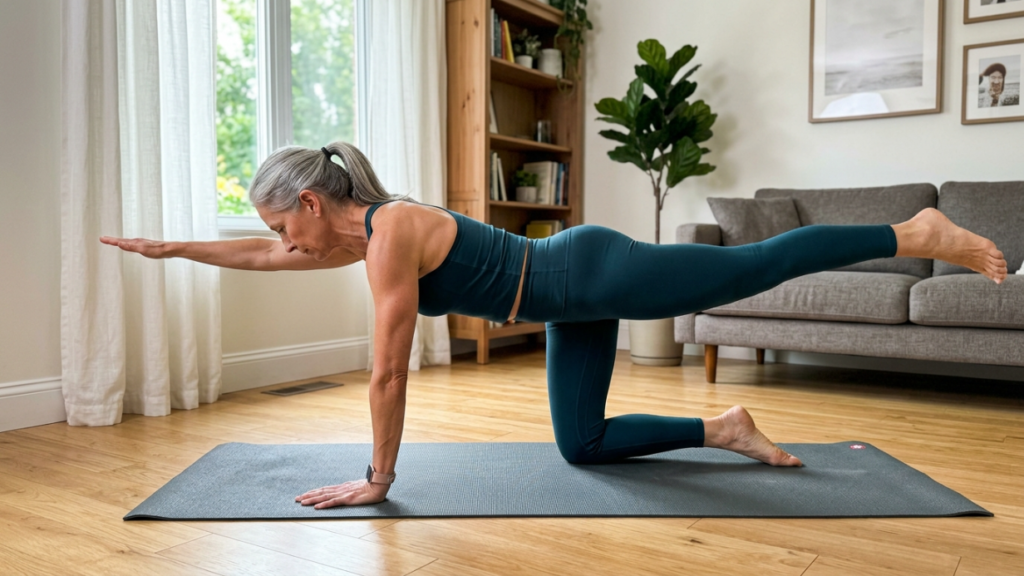
From the hands and knees position, reach forward with the right arm while reaching backward with the left leg. Don’t lift them as high as you can-stretch your arm and leg towards opposite walls to activate the deep muscles of the core without extending your spine.
Wall Sit Abdominal Bracing
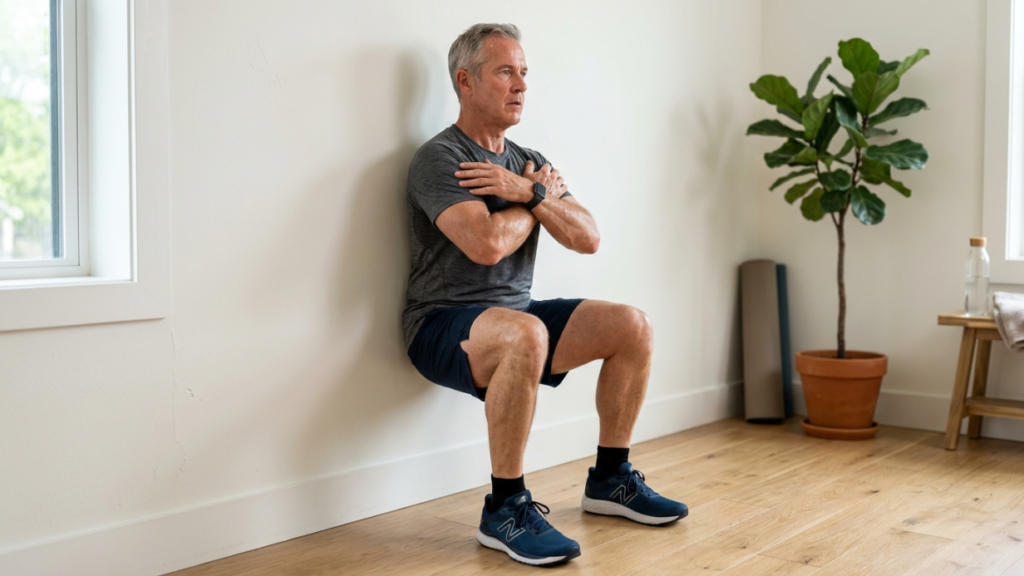
Stand with your back pressed against a wall and slowly slide down to a position where you feel comfortable. As you perform the exercise, draw your naval towards the wall as you sit, converting a traditional lower body exercise into an ab exercise.
The Side Plank Roll Exercise
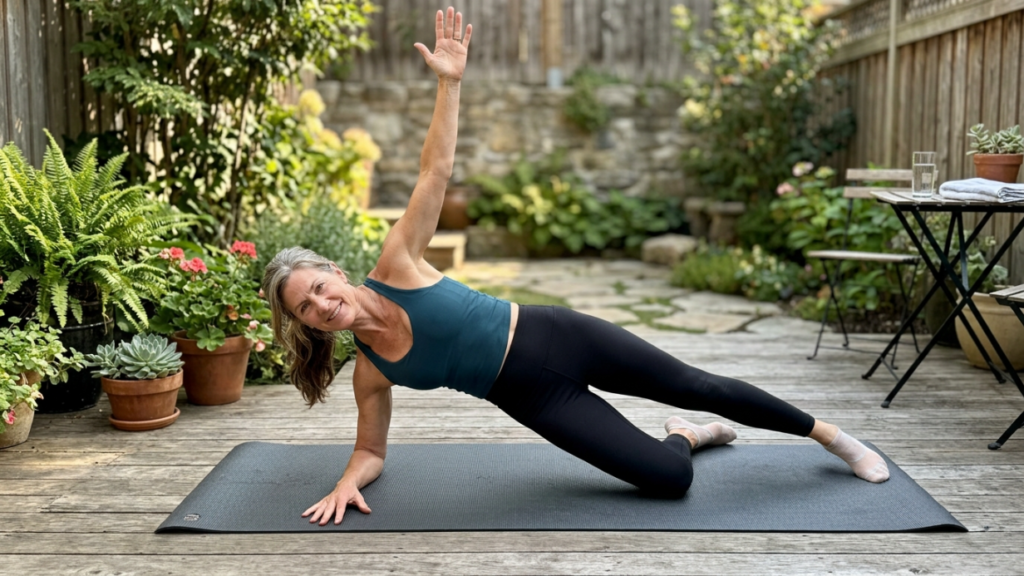
Sit down, bend both legs at 90 degrees, support your body with your elbow, and lift your body off the floor to perform the side plank exercise for 10 seconds. Then roll over to move into the front forearm plank position.
Heel Tap Exercises to Develop Lower Abs Stability
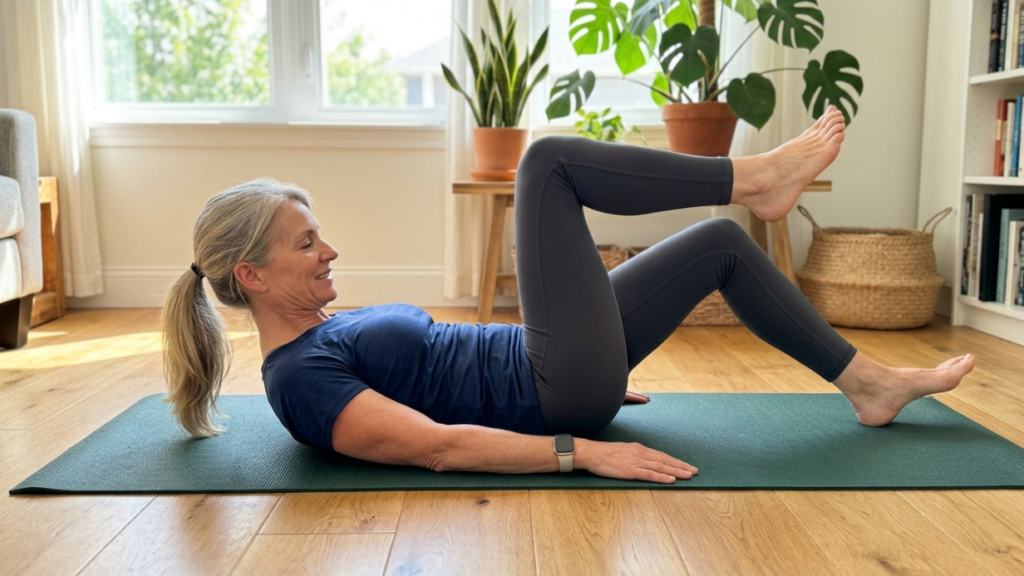
Lie down on your back and lift your legs above you, forming a 90-degree angle. Now, lower your legs one by one, trying not to allow your lumbar region to leave the floor when lowering your heels.
The Cat Cow Spinal Decompression
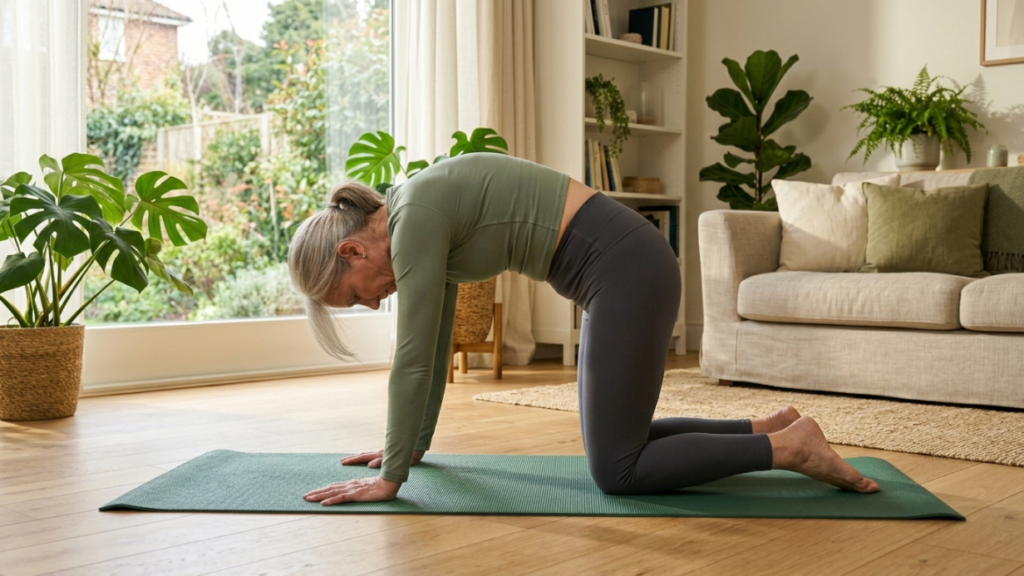
Get on all fours and alternately curve your spine into an arched position facing towards the ceiling (cat), and curve your spine and allow your belly to sag down while you look up (cow). It changes the core muscles from stiff bracing to dynamic mobility.
Sitting Waist Rotations with Body Alignment Check
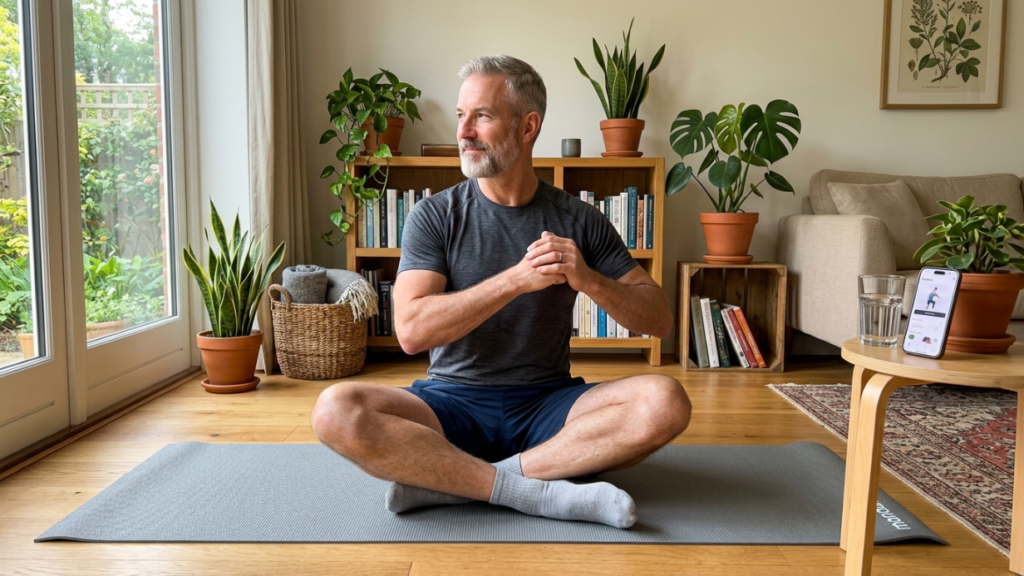
Take a seat and make sure that your body is aligned properly. Make sure that your chest sticks out and cross your arms over your chest. Gently rotate your shoulders alternately from one side to another without moving your pelvis to engage your waist’s internal and external rotational muscles.
The Final Standing Belly Vacuum
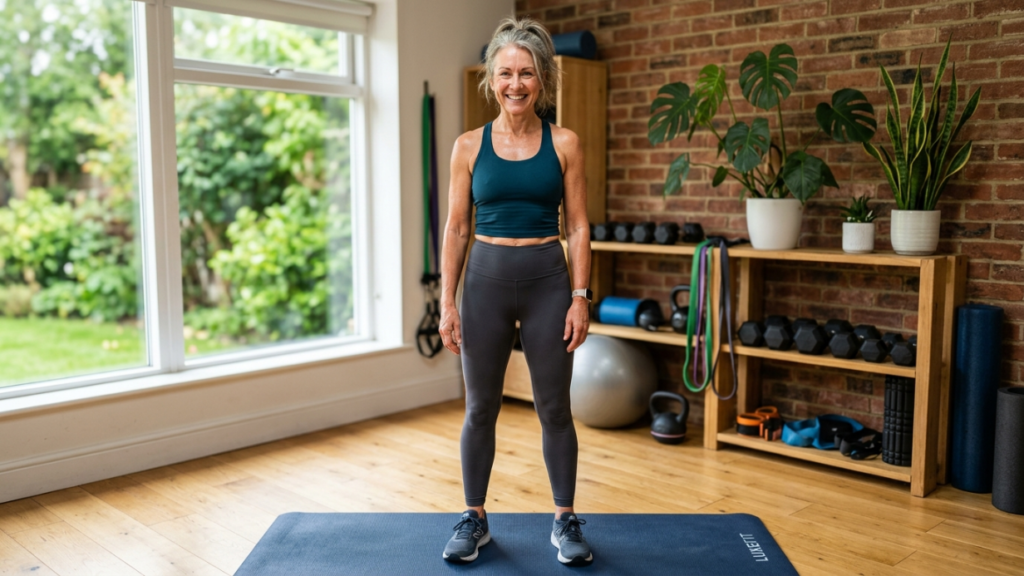
Move into your standing position. Breathe out as much air from your lungs as possible and pull your tummy in so that your muscles engage, as though trying to squeeze into a tight top. Hold the state of vacuum formation within your body for five to ten seconds.
