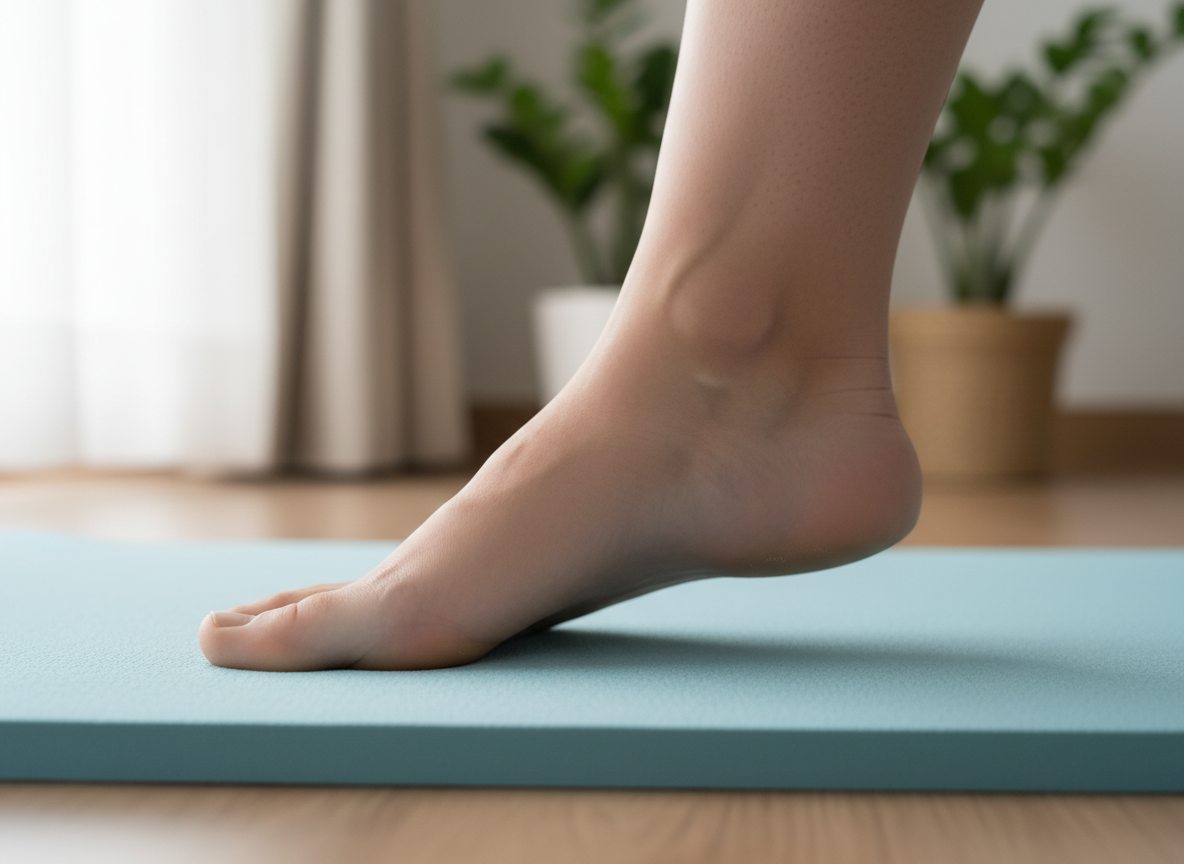
Plantar fasciitis discomfort often develops through repeated strain along the heel and arch. Long periods of standing, limited ankle mobility, and reduced foot strength contribute to daily symptoms. Exercise focused on controlled movement supports tissue flexibility and strength. Consistent practice supports comfort during walking and standing. The following sections outline specific exercises and related guidance designed for gradual improvement through natural movement based strategies.
Seated Toe Extension Stretch
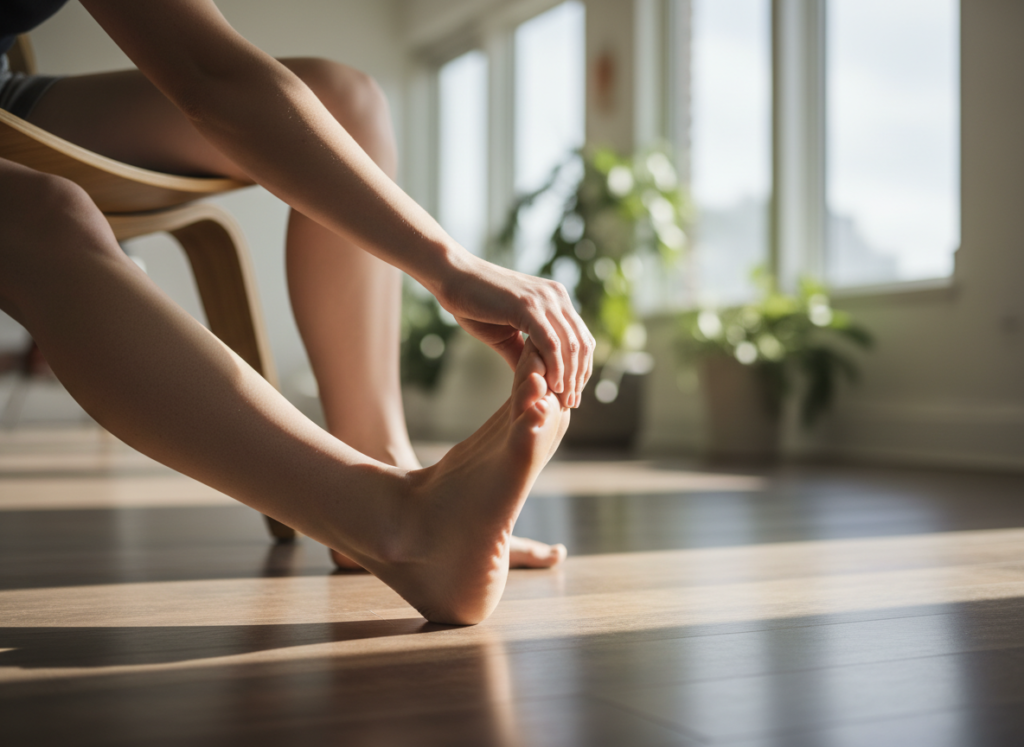
This movement targets tension along the arch and toe flexors. A seated posture limits load on the heel. Fingers pull toes toward the shin until a mild stretch appears along the sole. A fifteen second hold supports tissue lengthening. Three repetitions per foot suit morning routines following overnight stiffness.
Towel Curl Strength Drill
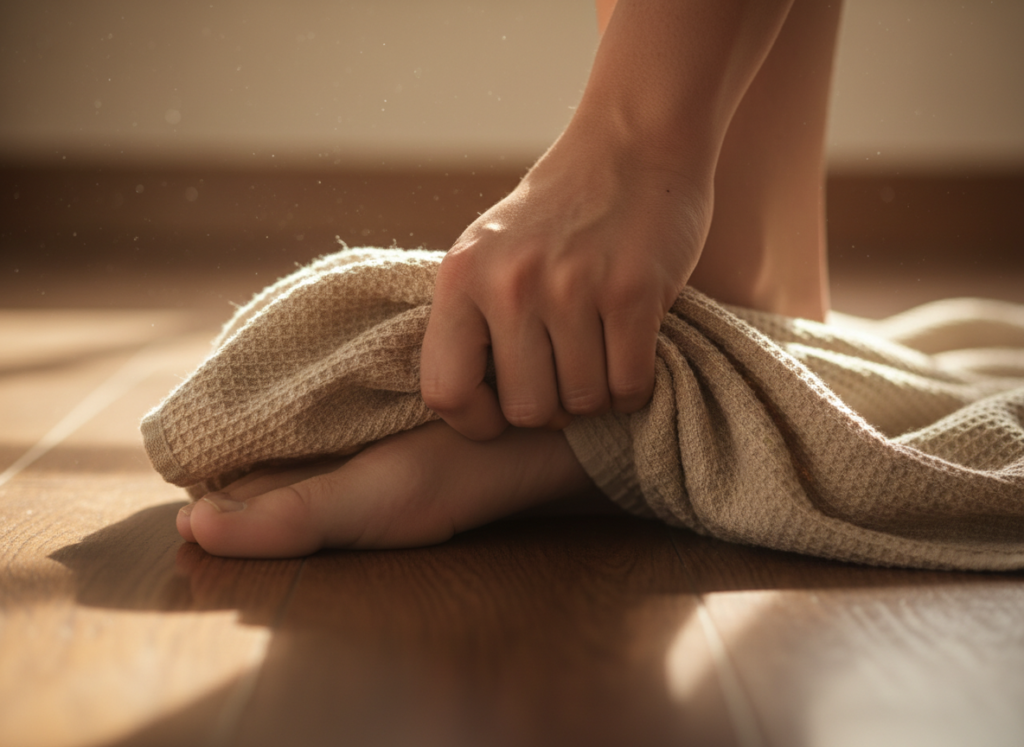
Towel curls support intrinsic foot muscle strength linked to arch support. A towel placed flat on the floor provides resistance. Toes grip and pull the towel inward while the heel remains grounded. Ten repetitions form one set. Daily practice improves load sharing across the foot during standing.
Wall Supported Calf Stretch
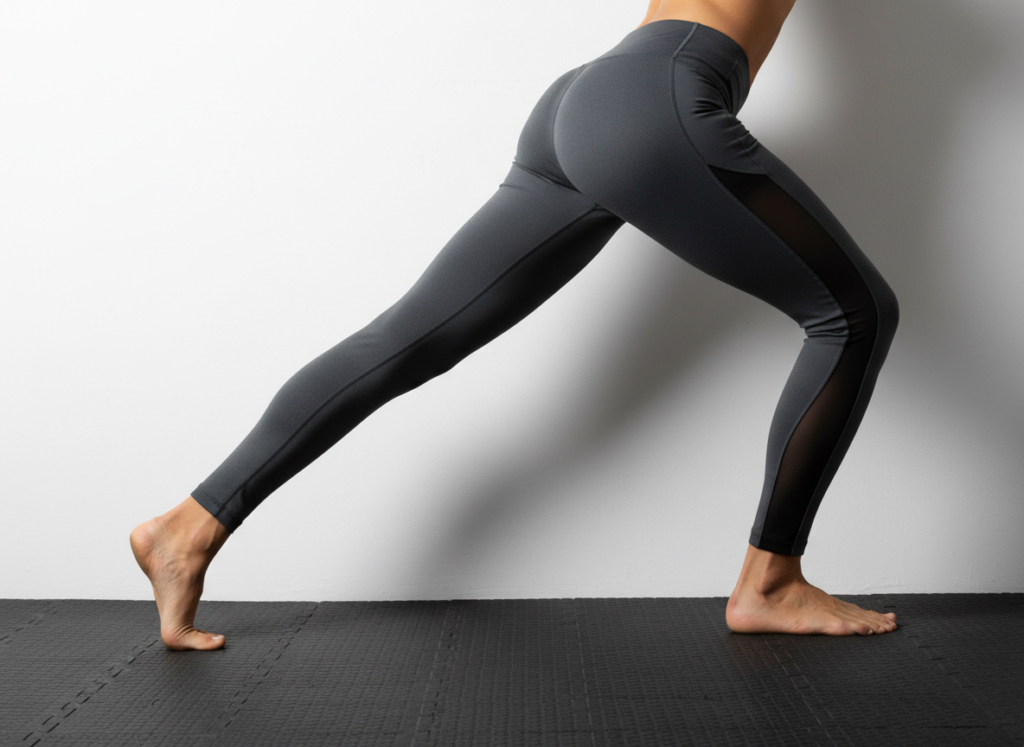
Tight calf muscles increase heel strain during walking. Wall supported stretching addresses this issue. One leg stays back with heel on the floor while the body leans forward. Stretch sensation appears through the lower leg. Twenty second holds repeated three times support flexibility.
Plantar Fascia Ball Roll
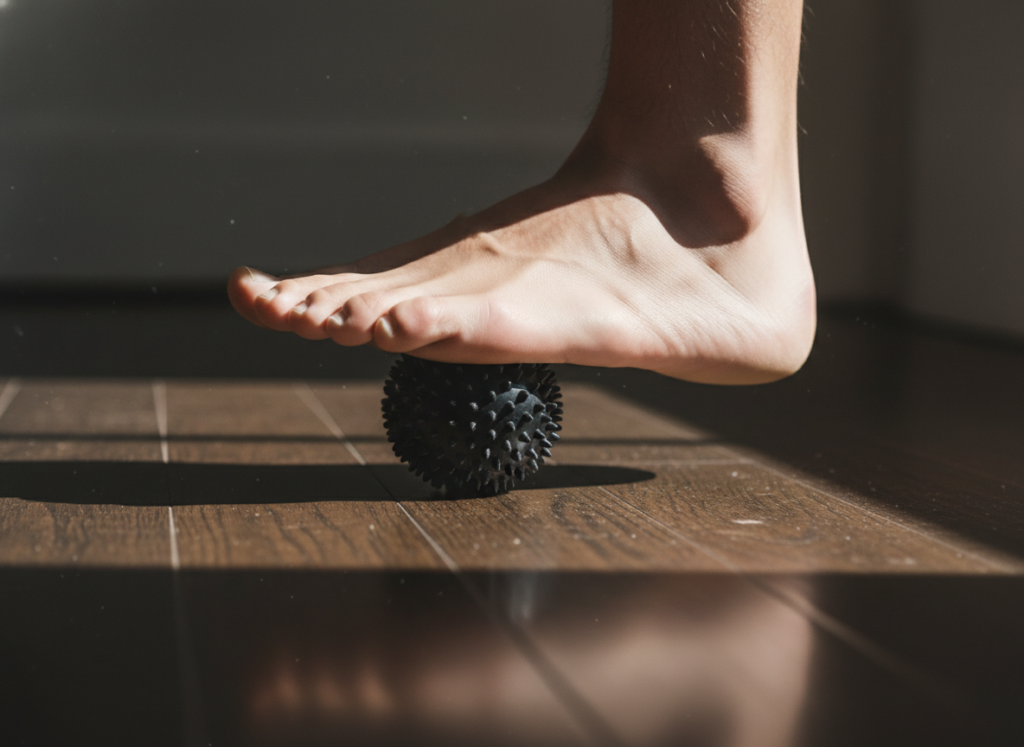
Ball rolling supports local circulation and tissue mobility. A firm ball placed under the arch creates gentle pressure. Slow rolling from heel toward toes maintains control. One minute per foot supports comfort. Evening sessions assist recovery following extended walking or standing demands.
Standing Heel Raise Exercise
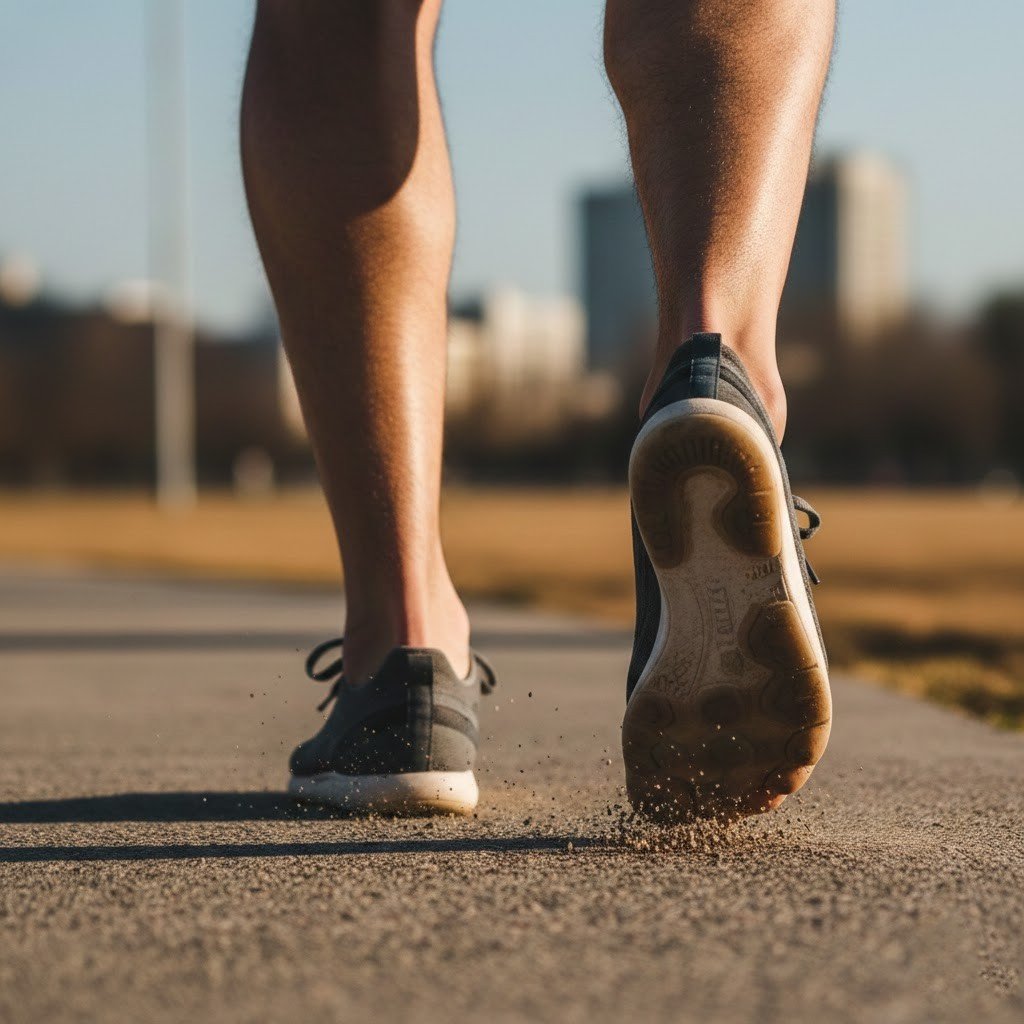
Heel raises build strength within calf muscles and support load tolerance. Standing near support improves balance. Heels lift slowly while toes stay in contact with the ground. A slow lowering phase reduces strain. Ten repetitions per set performed regularly improve muscular endurance.
Ankle Forward Mobility Stretch
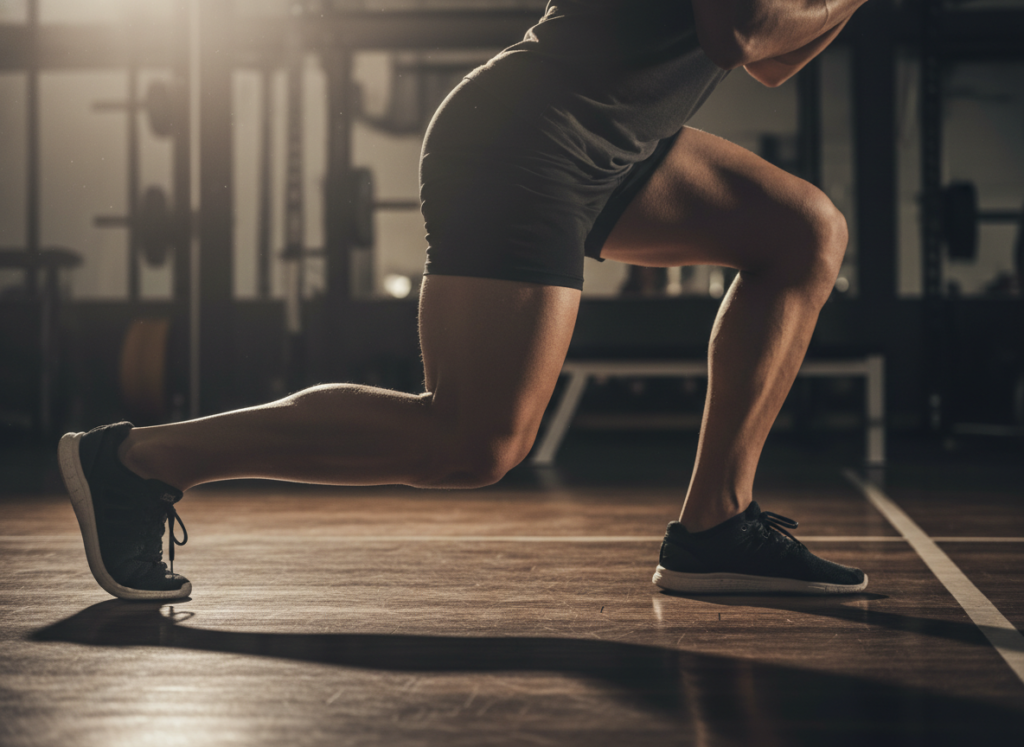
Limited ankle motion shifts stress toward the foot arch. Forward ankle stretching improves joint range. The knee moves over the foot while the heel stays grounded. A gentle stretch develops around the ankle joint. Fifteen second holds repeated several times support smoother walking mechanics.
Short Foot Muscle Activation
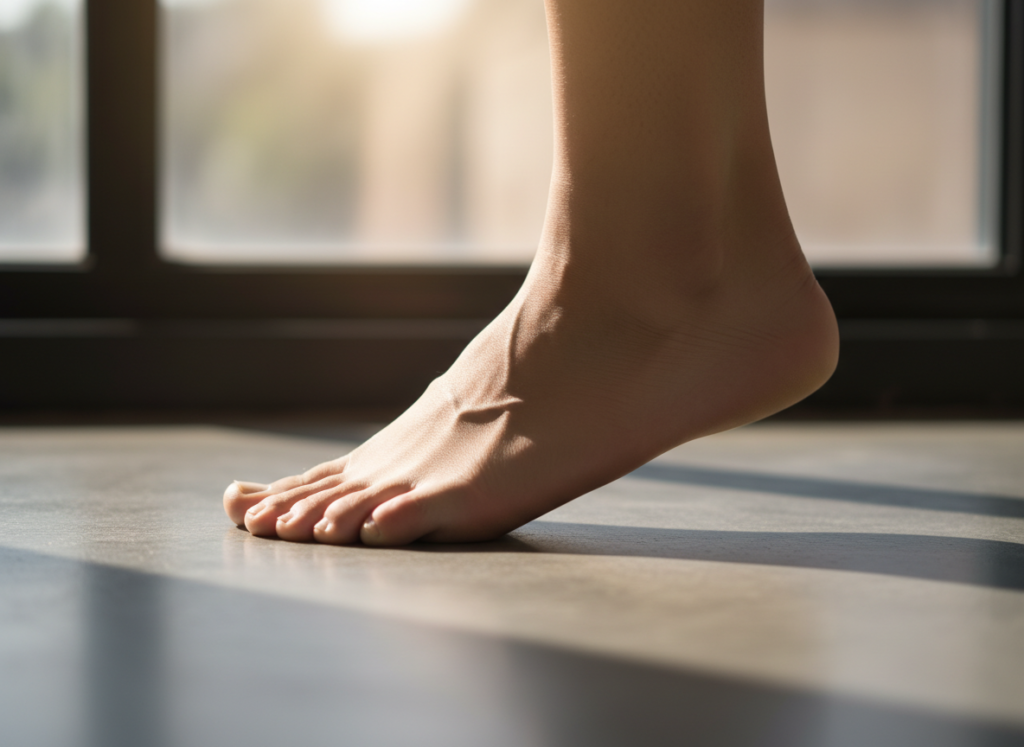
Short foot activation improves arch stability without toe gripping. The ball of the foot draws toward the heel while toes remain relaxed. A subtle lift forms within the arch. Five second holds repeated ten times build neuromuscular control. Improved stability supports daily standing tasks.
Single Leg Balance Hold
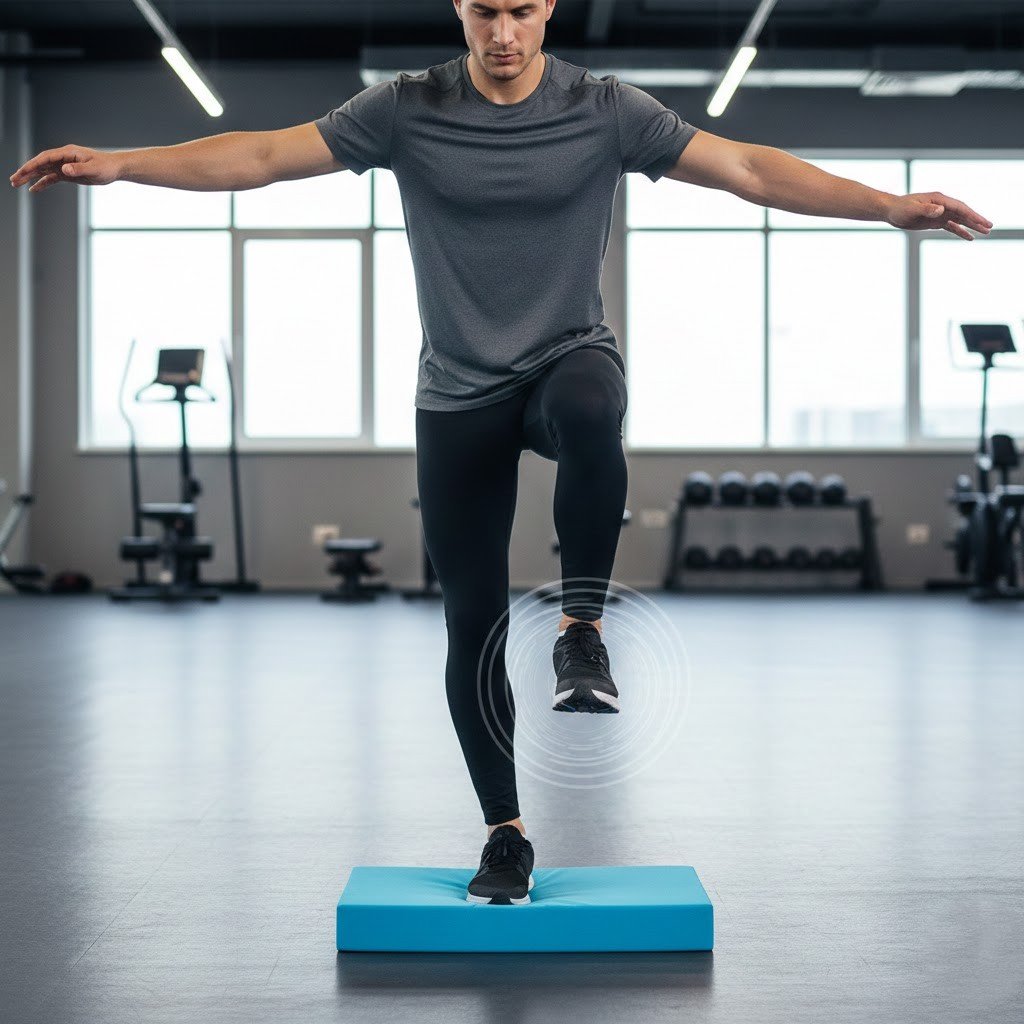
Balance exercises strengthen coordination across the ankle and foot. Standing on one foot challenges stabilizing muscles. A steady visual focus assists posture control. Twenty second holds per side suit early training. Consistent balance work improves adaptability on uneven surfaces.
Exercise Frequency Planning

Frequency influences progress and comfort. Morning sessions address stiffness after rest. Strength focused drills fit later in the day. Two short sessions per day support consistency. Rest days reduce irritation risk. Structured scheduling improves adherence and gradual tissue adaptation.
Footwear and Practice Surface
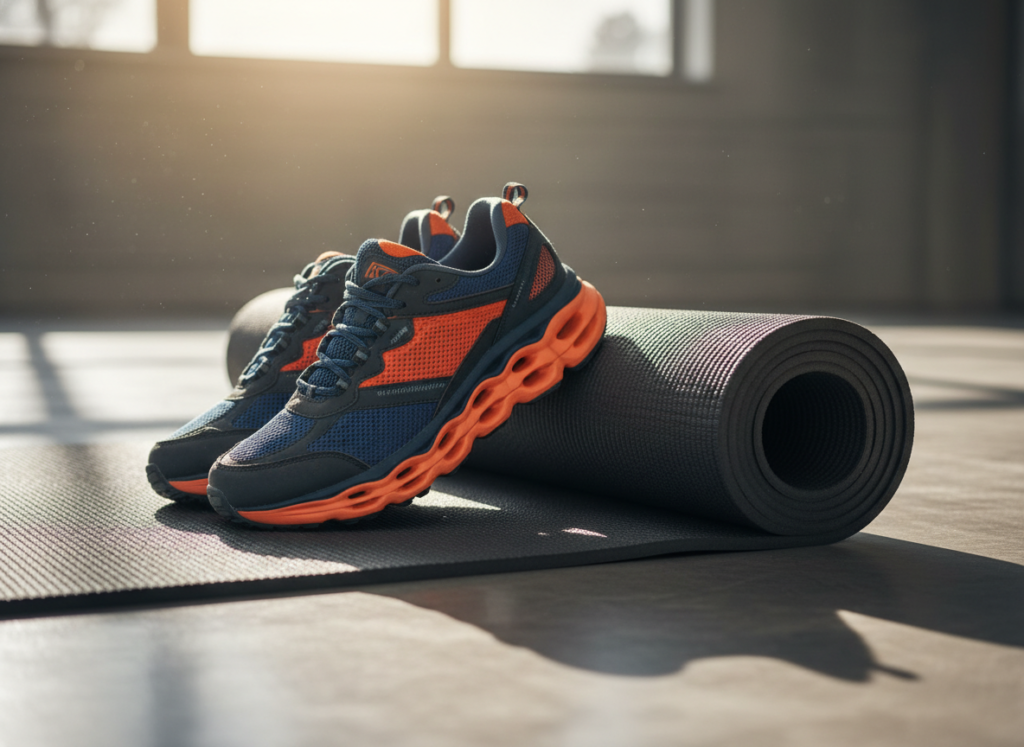
Supportive footwear improves exercise tolerance. Cushioned soles reduce impact during standing drills. Flat stable flooring supports balance activities. Barefoot practice suits seated movements only. Appropriate surface selection reduces unnecessary strain and supports consistent participation across daily routines.
